


Can the Universal Language of Plants help us Improve Education Outcomes for English Language Learners (ELLs)?
As New York City’s public education system struggles to maintain quality instruction for ELLs, Hydroponic Classrooms are helping to close the learning gap.
Kendall Gill, a teacher at the Jeromus Remsen School in Queens, had become accustomed to hearing an array of languages in her classroom: Japanese, Mandarin, Indonesian, Arabic, Spanish, French, and Turkish, among others. Just ahead of the 2024 school year, Gill received a surprising request: The school principal asked her if she would be open to turning her classroom into an indoor, hydroponic farm.
In the year since, Gill has witnessed the Hydroponic Classroom bloom into one of the most valuable and effective learning tools for her students enrolled in the school’s English as a New Language (ENL) program. “My ENL students come into the lab and they learn English through hydroponics, through the science curriculum that I get from NY Sun Works,” Gill said. “I adapt it to be more understandable.”
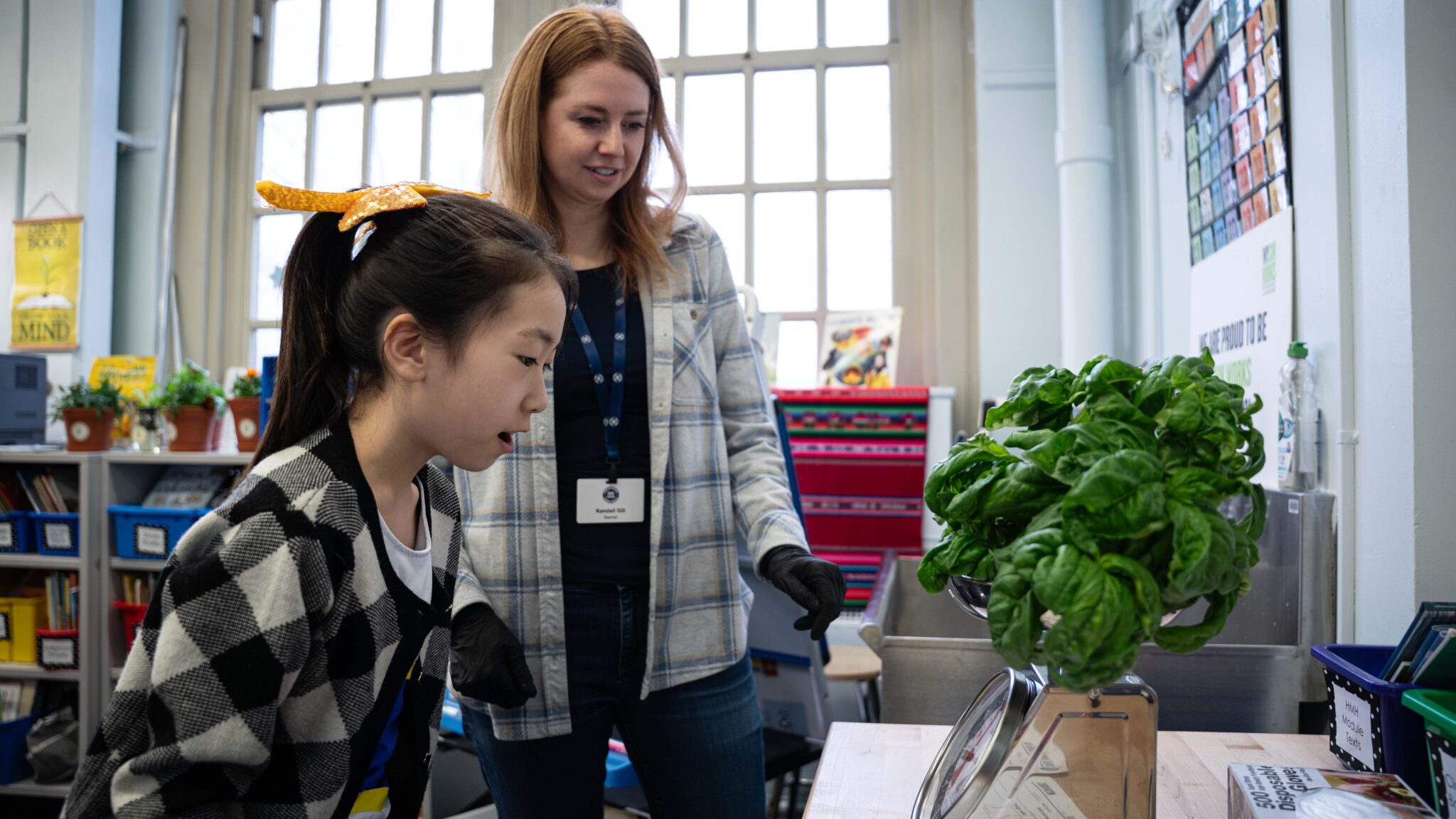
For young EEL students who arrive in an English-speaking classroom for the first day, keeping up with their peers can present an insurmountable hurdle. Not only do you have the challenge of learning a new language, but you also have to build skills in core academic subjects at a rate comparable to those for whom the language presents no barrier. It’s really hard and it leads directly to negative educational outcomes; researchers cite lower average test scores in reading and mathematics, higher dropout rates, and lower college attendance among EEL students compared to their English-speaking peers.
Students learning English face a number of challenges across all U.S. public school districts, but in the New York City School District the problems are particularly acute: the district enrolls one of the highest percentages of English Language Learners of any district in the nation. According to former Comptroller Brad Lander, the number of students enrolled in ELL programs increased 16.8% from 2022-2025. In September 2025, Lander also reported system-wide non compliance and “profound failures,” among English Language Learner (ELL) programs, including denials of legally mandated services to students. The pressure on the public school system to address these shortfalls comes as the number of students enrolled in ELL programs continues to mount.
“In NYC, the number of students enrolled in ELL programs increased 16.8% from 2022-2025.”
Meanwhile, New York City teachers like Gill are turning to Hydroponic Classrooms as an alternative tool of instruction. Hydroponic Classrooms are urban farming labs that rely on a soil-less, technology based system to grow plants indoors. Using a comprehensive curriculum tailored for students from all linguistic and cultural backgrounds, NY Sun Works can bridge some of the language gaps through hands-on learning. Funded by NY Sun Works’ partnership with Queens Council Member Lynn Schulman, the Hydroponic Classroom at Jeromus Remsen has sustained crops from cherry tomatoes and cucumbers to edamame and dragon tongue beans.
For teachers like Gill, an unexpected benefit of the Hydroponic Classroom is that it helps students learn English in a practical way; it is miles from the stiff lessons and recitations of yesteryear. Using the NY Sun Works curriculum, Gill adapts the slides for her students, including translations, explanations, or sentences, or, as she puts it, “whatever I need to make the content more understandable.”
In our interview Gill highlighted how the hands-on aspect of the Hydroponic Classroom enhances the effectiveness of ENL lessons. “I find so many kids that seem like they’re almost starved for this kind of hands-on agricultural experience.” In a city where backyards and gardens are a luxury, the Hydroponic Classroom has become an oasis for students to learn, touch, and cultivate their own plants.
“In a city where backyards and gardens are a luxury, the Hydroponic Classroom has become an oasis for students to learn, touch, and cultivate their own plants.“
About seven miles north of Gill’s classroom, Diana Esquierdo has also found success among her ELL students at the Alfred Zimberg School in East Elmhurst, Queens. “There were two brothers that recently came who speak primarily Arabic,” Esquierdo said. Yet when they came into the classroom, she noticed they immediately gravitated towards the lush, green, towers flanking her classroom walls. “[The plants] are a universal language,” she said.
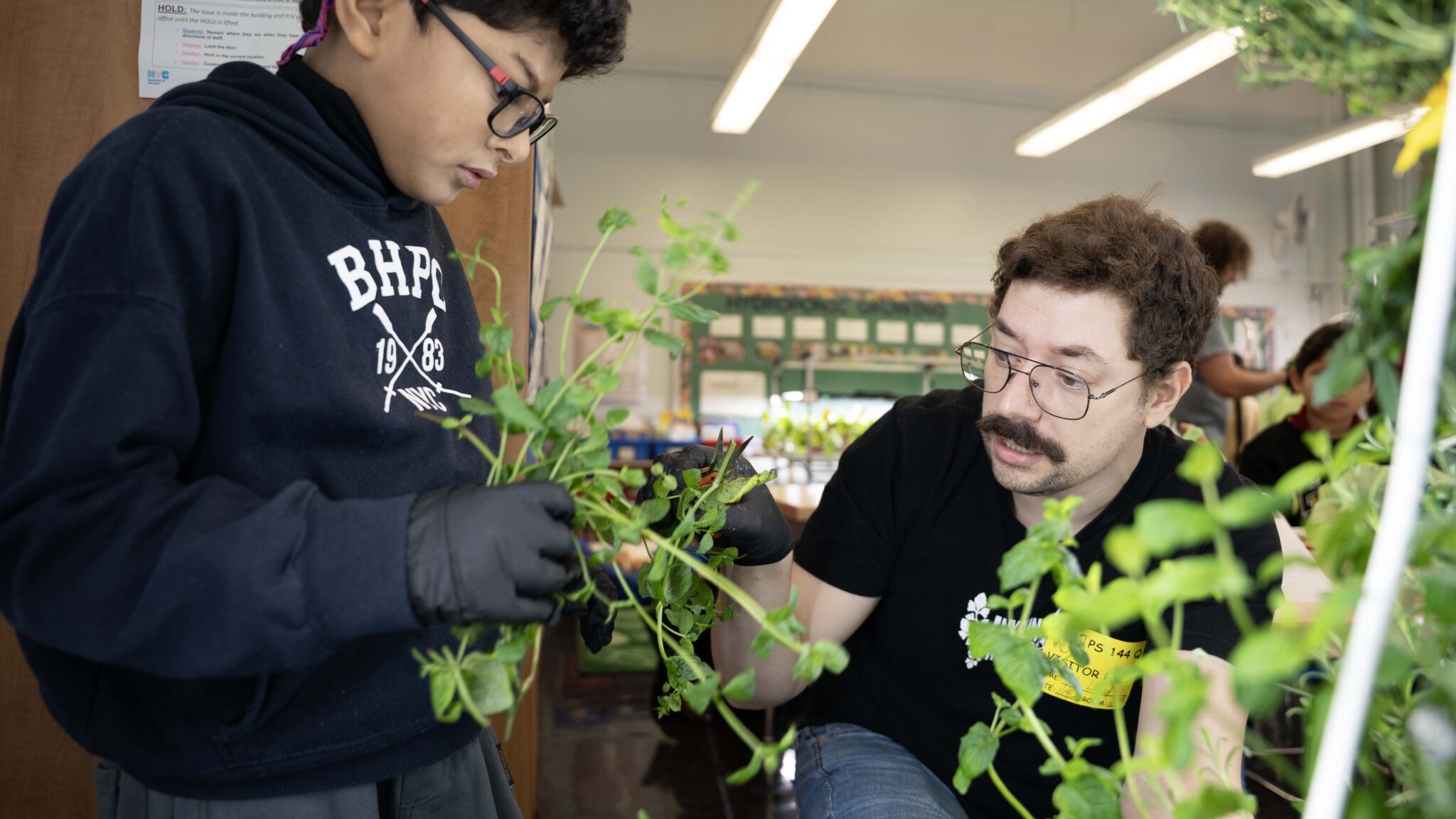
As one of her tools, she equips each one of her students with a notebook. In it, she encourages them to write down and observe all they notice about the classroom: plants that have grown, not grown, thrived, or require more attention. For all of her students, whether they speak English fluently yet or not, the notebooks allow space for them to practice different languages and get more familiar with English. In the Hydroponic Classroom, where plants feel like an accessible place to start, Esquierdo looks forward to her students — and their introduction to a new language — each day.
There have been gradual efforts to improve the quality of ELL instruction across the city’s public schools. Especially with Mayor Zohran Mamdani’s efforts to expand reading and math programs to better focus on each student’s specific needs, Lander’s initial report has sparked some action. Yet as the effects of these changes continue to take hold, more public school teachers are utilizing another tool, teeming with green plants and fruitful lessons.
AUTHOR: ANNA LEE


