TESTING donation page
Making Learning Visible in Your Hydroponic Classroom PD
Wondering how to make learning more apparent in your Hydroponic Classroom? At these virtual professional learning sessions, we invite partner teachers (especially those teaching PreK-8th Grade) discuss strategies for highlighting student work and the process of making the classroom reflect the learning happening within it. We will base some of our work around project-based learning practices and gather inspiration from the Reggio Emilio approach.
Blah
QGazette: LaGuardia Community College, Congresswoman Nydia Velázquez, and NY Sun Works Celebrate Hydroponic Classroom
LaGuardia CC, in collaboration with Congresswoman Velázquez and NY Sun Works, has opened a new Hydroponic Classroom.
Blah
Asharq Al-Awsat: Environmental Education for a Sustainable Future
The perception of the environment has expanded in recent decades from fighting pollution to the management of natural resources. The increase in the world’s population from 1.5 billion at the beginning of the twentieth century to over eight billion today, together with a major shift in production and consumption patterns, has led to a doubling of the demand on resources. This requires proper and balanced management, coupled with fair distribution of natural resources, to ensure that these billions of people obtain their basic needs.
Blah
Cutting the Ribbon at LaGuardia Community College with Rep. Nydia Velázquez and Pres. Kenneth Adams
We are excited to celebrate one of the first post-secondary education partnerships of its kind at LaGuardia Community College! We commemorated this landmark expansion with LaGuardia CC’s President Kenneth Adams and long-time friend of NY Sun Works Rep. Nydia Velázquez, whose generosity helped create these critical climate science opportunities as well as at 19 other schools in NY’s 7th Congressional District.
Expanding to the post-secondary level has been a goal of NY Sun Works as students of urban farming at the community college level can dive deeper into the science behind sustainability and make increasingly relevant connections to their long-term careers. This addition to our program also creates a more tangible path to green careers for young Farmer Scientists, incorporating climate-forward thinking into the hustle and bustle of the NYC job market. Harnessing higher level education for future career and academic opportunities connects students to the rapidly blossoming field of Controlled Environment Agriculture (CEA), which has taken root in many cities including the Big Apple. CEA-focused programs at the Community College level help high school students seeking employment break down barriers, pursue their passions, and join the growing green workforce.
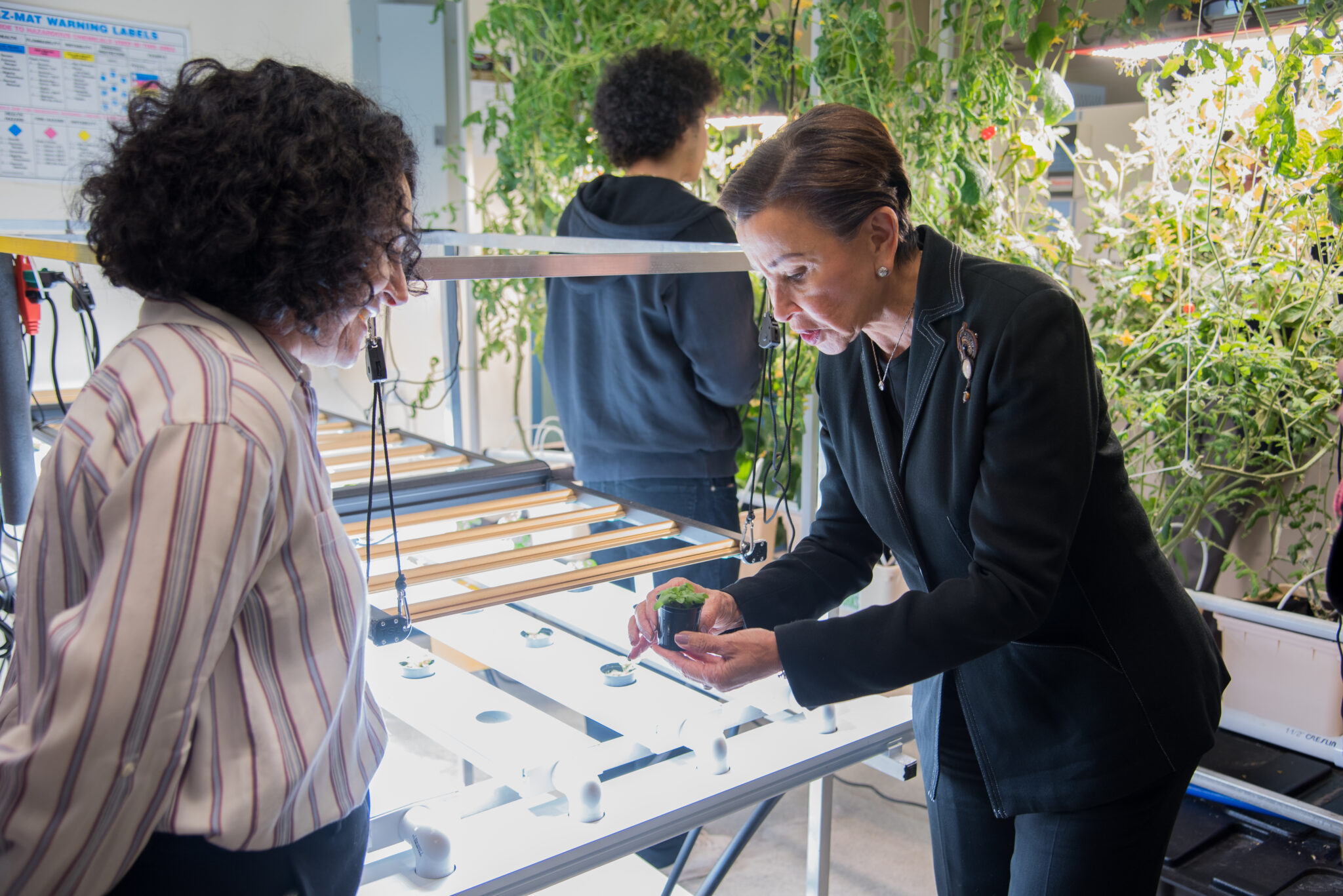
For over thirteen years, we’ve used hydroponic farming to reshape how NYC schools are teaching the science of sustainability and climate change. Through getting their hands dirty, connecting with nature, and growing plants from seed to harvest, students in our program are increasingly prepared to make sustainable choices and tackle a climate altered future. We’ve built Hydroponic Classrooms at over 300 partner schools across the five boroughs and beyond, empowering students as young as PreK and kindergarten to high school juniors and seniors.
In a city where students often select their prospective career pathways as early as middle school, supporting CEA initiatives as they expand upward through the academic system is critical to creating long-term pathways for young people interested in creating an equitable, sustainable future. In fact, high school students who’ve graduated from our Urban Agriculture Workforce Development Program will be among the first to explore our labs at the community college level, which will empower them to dream, aspire, and achieve sustainably. Our hope is not only that these students will be encouraged by these opportunities, but that they’ll be inspired by local leaders like Rep. Velázquez who have worked tirelessly to understand the city’s need, allocate resources, and show up with feet on the ground when the time comes to make intentional, positive, long lasting change for a sustainable future.
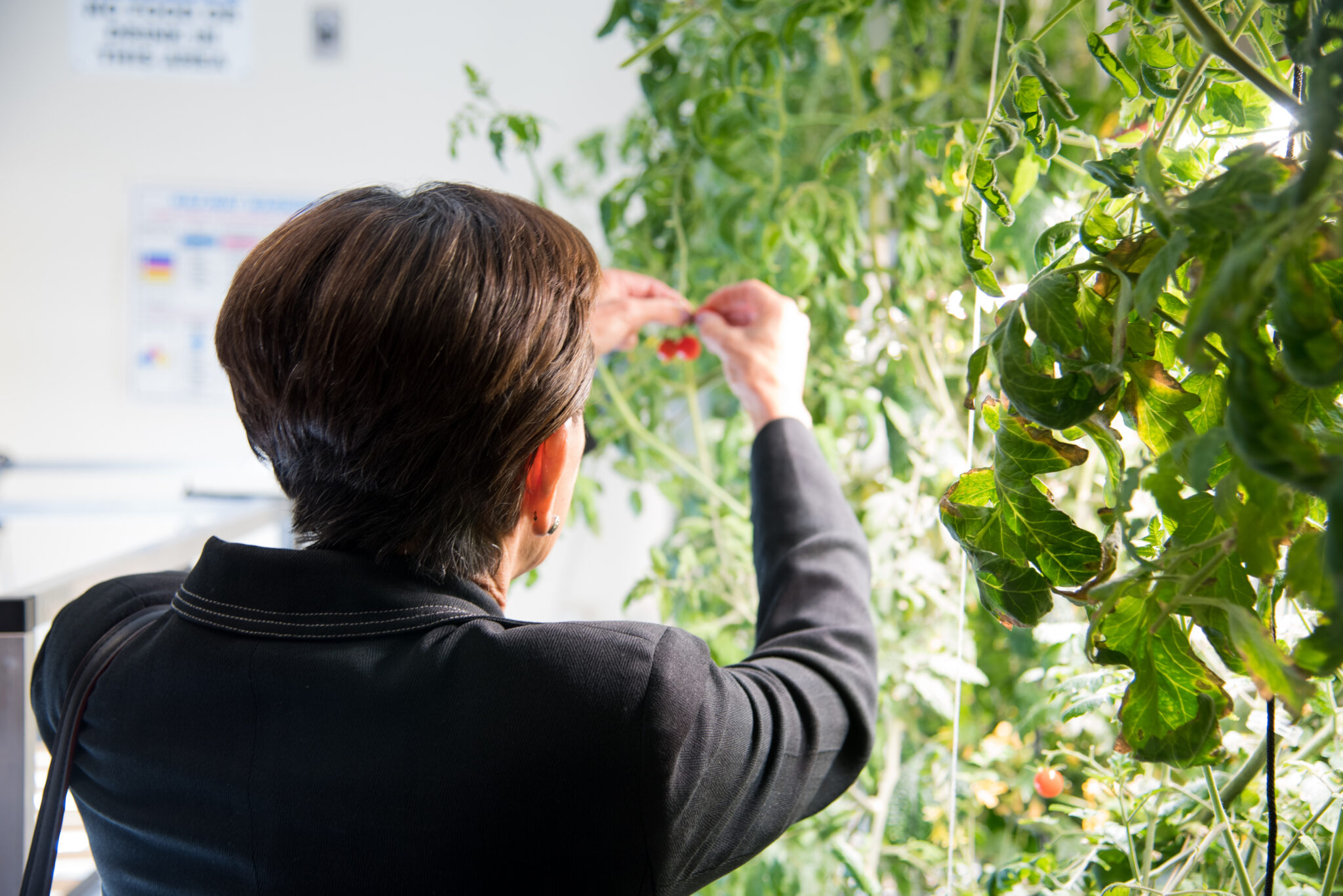
Students have already planted the first seeds at the LaGuardia Hydroponic Classroom, and we have more exciting post-secondary opportunities in store for this year.
Blah
Capital Funding: How it Works & Why it Matters – Deadlines Approaching
Capital funding is one of the most important ways schools in New York City can create new educational opportunities for their students. While this process is available to all schools throughout the NYC Department of Education (DOE), not everyone is aware of it or how to navigate submitting an application. Putting together application materials for large city grants can certainly be daunting, but we’re here to help schools interested in Hydroponic Classrooms (new, or upgrading existing) connect with their local officials, build the capacity to advocate for themselves, and create new pathways to climate education. The deadline for Bronx schools to submit their application to Bronx Borough President Vanessa Gibson is rapidly approaching – Due Friday (tomorrow!), January 19 at 5 pm, so the sooner you finalize your submission, the better! Other borough president and city council applications are due in February. It only takes a few minutes, and could be the difference in helping create the next generation of climate scientists, activists, and leaders at your school.
We’ve emphasized its importance, but what is capital funding anyway, and how does it actually work? Each year, members of the NY City Council as well as Borough Presidents receive a budget from which they’re allowed to allocate funds to public school projects throughout their districts. These funds are used in part to build new projects through the School Construction Authority, who have helped to renovate classroom spaces for more than half of our Hydroponic Classrooms throughout the years. These building projects not only help schools create opportunities for their students, but they also improve the quality of their education all around through room renovations and facility improvements. For schools with a limited budget, receiving funding for these projects can be the difference between a traditional and more limited science education, and an innovative, hands-on Hydroponic Classroom experience. And we’re here to help schools to apply.
More than half of NYC Council members have voiced their support for our program through funding allocations, and we’ve seen a tremendous amount of success in helping schools learn the ropes of connecting with city government, writing grant proposals, and sharing the impact their hard work creates. Our Program Development team consistently meets with partner school administrators throughout the process of building a Hydroponic Classroom, from conception to installation, demystifying not only the capital funding process, but also other potential revenue streams for underserved schools like expense funding, which we apply to on behalf of our partner schools. To create the sustainable future our students deserve, we need all hands on deck, which is why we’ve adopted this multiplicative approach to climate education in hopes of inspiring students and educators alike to plant their roots, get involved, and make a meaningful difference where it’s needed most.
For more information on capital funding, please reach out to our development team, and check out our NY Sun Works Info Sessions which will be held throughout the remainder of January and February.
Blah
NY Sun Works Partnership Info Sessions
Are you interested in bringing a NY Sun Works Hydroponic Classroom to your school? Join us for an information session to learn more about our program, hear about grants available for Hydroponic Classrooms including capital funding, and ask our team any questions you may have. Registration is now available for Zoom information sessions, please spread the word!
Friday, April 17 | 10-11 AM | Register Here
Monday, May 11 | 3-4 PM | Register Here
Blah
FEBRUARY
Youth Conference Info Sessions
Who: All NYSW Partner Teachers interested in attending or participating in this year’s 14th annual Youth Conference
When:
Monday, February 24 | 3pm-4pm | Register Here
Wednesday, February 26 | 3pm-4pm | Register Here
Where: Virtual/Zoom
Overview: If you are interested in learning more about our 14th annual NY Sun Works Discovering Sustainability Science Youth Conference, please join us at one of our information sessions. Our annual conference brings together students from hundreds of partner classrooms across the five boroughs of NYC to share students’ own investigations and action projects through student-led presentations!
Blah
A Wish for Climate Education in the New Year
We’re kicking off the new year like many others: with big hopes for 2024. This year, we resolve to further our aim of bringing climate education to every student and tackling the most pressing issue of our time: climate change. It’s essential that we build the tools and opportunities students need to confidently tackle a climate-altered future. Studies have shown that early exposure to climate science subjects empowers students to strive for careers in sustainability, science, and technology. Our 300+ partner schools are teaching climate science in their Hydroponic Classrooms throughout the school year, but it’s essential that ALL students have access to climate education. We have an opportunity to make this a reality in New York State with important legislation recently introduced in Albany – and we encourage everyone to get involved to make sure it happens.
To that end, we recommend residents of New York State connect with the Climate and Resilience Education Taskforce (CRETF). CRETF has spearheaded critical climate education legislation: Senator Andrew Gournarde’s climate education bill S.278A and Assemblywoman Jo Anne Simon’s companion Assembly bill A01559A. These bills propose establishing learning expectations on climate education and environmental justice in all public Pre-K, elementary, and secondary schools. The first interdisciplinary P-12 education bill in NY State, this bill also provides professional learning and ongoing support for educators, establishes an Office of Climate Education and Workforce Development, and centers equity and justice. Please check out CRETF’s Toolkit for Action and consider attending upcoming Albany Lobby Days. Residents of New York State can sign the memo of support, contact their Senator or Assemblymember via Action Alert, post graphics of support on social media, and most importantly, join a lobby day in Albany. Showing up is the first step in making meaningful change, and with feet on the ground and voices in the air, we’re feeling more confident than ever about the future of climate education. We’re growing the next generation of Farmer Scientists right here in New York City, but every child deserves a sustainable future, regardless of where they call home. Every post, donation, signature, and sign helps not just the NY Sun Works community, but the human community.
Like the plants nurtured in each Hydroponic Classroom, we’re growing onward and upward in 2024, with a host of exciting announcements to share over the next few weeks already. It takes a village to change the world, and as we all know, New York City is so much more than a village. Together, we can meet the moment on climate change, and provide the education our young people need to build the sustainable future they deserve. The best time to support a renewed vision for quality climate education was 20 years ago, but the next best time to get involved is right now. Please consider supporting not only our work bringing Hydroponic Classrooms to all NYC public schools, but also broader climate education initiatives that can help empower students not only in the big city, but beyond. With important legislation on the ballot, the time is now for New Yorkers to take action, get in touch with climate leaders, and through our actions, show the young people of today how to be the leaders of tomorrow.
Blah
Manuela Zamora Named to 2023 City & State Responsible 100 List
We’re honored to share some spectacular news this holiday season, as our Executive Director Manuela Zamora has been named to City & State’s 2023 Responsible 100 List! The Responsible 100 list honors the countless leaders around New York working to create a better world. Alongside city government officials, chefs, lawyers, and a diverse group of fellow New Yorkers, Manuela’s nomination comes as part of our work bringing climate education to the children and young adults of NYC regardless of zip code. Through the use of hydroponic farming, Manuela has guided us toward a new and unique vision for students at our partner schools, bringing nature back into the classroom and healthy, fresh veggies back into family homes all while connecting young Farmer Scientists with where food comes from and how their actions impact the planet. We look forward to another year of growth, learning, and climate science.
Blah
Climate Action Day Workshop PD: Health, Wellness, & Green Space
Join us in a NY Sun Works Professional Learning session to prepare for your next NYC Climate Action Day! The Climate Action Day focused on Health, Wellness, & Green Space will take place on Wednesday, April 17. This session will give you time to plan! We will share NY Sun Works learning resources, lessons, and units related to engaging students in green spaces and environmental action. You and your fellow partner teachers will brainstorm and come up with the plans to implement this in your Hydroponic Classrooms and schools!