TESTING donation page
Tackling Energy on the First Official New York City DOE Climate Action Day!
Energy is what makes our bodies move, plants grow, and technology function. It plays a vital role in everyday living, and yet so little time is spent teaching students where the energy that powers our lives comes from, and how to manage it wisely. This year, the New York City Department of Education’s Office of Energy & Sustainability is taking on this topic and more with the introduction of Climate Action Days! Held four times each school year with themes including Energy, Water, Waste, and Green Space, Climate Action Days give students and teachers new opportunities to learn about the science behind sustainability and unite their communities in the name of climate education. This year’s first Climate Action Day is December 6th, and with a focus on energy, we’re thrilled to support this new and exciting occasion.
Our spectacular Education Team has created a variety of tools and resources to help schools dive into the topics of conservation and responsible use of energy. In preparation for December 6th, we’ve shared resources including climate action-focused activities and lessons at our Election Day Professional Development Sessions, ranging in complexity from easy and accessible to involved and in-depth. These resources are tailored to each grade band ranging from K-12, in the hopes that challenging students’ presumptions about their energy usage and daily habits will inspire the critical thinking that leads to sustainable living. We want teachers to feel prepared and in-the-know, and begin the planning process early to ensure fun yet rigorous opportunities for climate education.
Not only do we want this to be a day about education, but true to its name, we also want it to be about action. Through the activities shared, students and teachers will approach the subject of energy with inquisitive minds, with opportunities to improve their school’s relationship with energy on multiple levels. At the elementary school level, activities include learning about their school building’s energy rating and finding simple solutions to increase that rating. Similarly, high school students have the opportunity to research solar-powered cell phone charging stations and fundraise to purchase and build one at their school. These small but meaningful moments of collective climate action can make lasting change if done with consistency throughout the New York City DOE. By putting our full weight behind the first of many such days to come, our goal is to inspire a passion for climate education that extends beyond the Hydroponic Classroom.
With more Climate Action Days on the horizon, we hope this will be the first of many celebrations that will empower the next generation of climate scientists, activists, and leaders. We’re excited to team up with the NYC DOE Department of Energy and Sustainability, as well as all our fellow sustainability partners throughout the city. Partner teachers who have not received our Climate Action Day resources should reach out to their respective Education Team members for access before December 6th. If you are a NY Sun Works Partner School and plan to participate in Climate Action Days, please tag us in social media posts using “@NYSunWorks” and use the hashtag #ClimateActionDays. For more information about Climate Action Days, visit the Sustainability Info Hub on the DOE’s official website.
Blah
NY Sun Works on Climate Action and Education at the Harvard Graduate School
This month, NY Sun Works was honored to be invited to the Harvard Graduate School of Education (HGSE) in Cambridge, Massachusetts for the 2023 Think Tank on Global Education (TGE): Climate Change Edition! Our Executive Director Manuela Zamora and Director of Education Liz McKoy traveled north to lead a session on Climate Action Partnerships, accompanied by Principal Irene Leon of PS89 Cypress Hills Community School in Brooklyn, one of our very first school partners. Chaired by Harvard professor and scholar of global citizenship education Fernando M. Reimers, this annual think-tank invites leaders in education to learn about, develop, and deliver powerful instruction based on the United Nations Sustainable Development Goals.
Underscored by an urgent need to reimagine education in the wake of a global pandemic that forced teachers around the world to bring learning beyond their classrooms, our goal at this think-tank was to share the lessons we’ve learned from over 13 years of partnering with schools and teachers. With learning loss impacting students across ages and grade bands, the need for an authentic, relevant, and meaningful school experience is present now more than ever, and our Hydroponic Classrooms have proven effective at offering just that. Over 90% of NY Sun Works partner teachers surveyed shared that students in their classrooms are interested in and eager to engage with core sustainability science concepts. By offering students the chance to get their hands dirty, learn by doing, ask questions, and discover their own answers, we’ve been consistently able to re-engage those who otherwise may have academically struggled.
One of the unique strengths that has helped shepherd our success is the adaptability of our program to the diverse landscape of New York City schools. With more than 300 school partners across all five boroughs as well as metro NJ, we’ve been able to reach and support learning communities of all shapes and sizes. With NYC, NY State, and Next Generation Science Standards (NGSS) in mind, our curriculum is designed to meet students where they are and empower them to connect with the climate in a way that best suits their learning styles. By cultivating plants of their own, students are encouraged to emotionally invest in their school experience as they nurture their very own living things. Not only do students grow their own crops, but they also reap the benefits of their work through in-school harvests that invite parents and other community members to join in, creating a full cycle of learning and reciprocity.
By speaking to our experience building sustainable partnerships in the largest public education system in the United States, we hope to inspire others to tackle the most pressing challenge of our time: climate change. Only through equitable, accessible opportunities for education and growth can we build the sustainable future our young people deserve. While we’ve been working hard to bring nature into the classrooms of NYC, we were thrilled to join others making a difference in communities of their own and feel inspired to continue driving meaningful change in the communities where it’s needed most.
Blah
VFD: Village Academy in Far Rockaway Opens New Hydroponic and Aquaponic Greenhouse
NY Sun Works in partnership with Borough President Donovan Richards Jr. today announced the opening of a new greenhouse and hydroponic farm classroom at Village Academy in Far Rockaway, Queens. The ribbon-cutting celebration unveiled a classroom with aquaponic and hydroponic technologies to complement the school’s sustainability science curriculum provided by the nonprofit.
Blah
Building 20 New Hydroponic Classrooms in the Bronx with Rep. Ritchie Torres
This week, NY Sun Works was excited to celebrate the addition of 20 new Bronx partner schools joining our community in the Hydroponic Classroom at the Theatre Arts Production Company School (TAPCo) in the Bronx, thanks to generous funding from Congressman Ritchie Torres (NY-15) and with support from Senators Chuck Schumer and Kirsten Gillibrand. The Congressman joined Director of Development and Government Relations Megan Nordgrén, as well as principals from the schools receiving labs to celebrate the new hydroponic programs across the district. The farmer-scientist students of TAPCo also gave a tour of their hydroponic classroom and shared details about their experience learning about climate and sustainability science surrounded by the leafy green fruits of their labor.
With concerns ranging from resource efficiency and extreme temperatures to air quality and high asthma rates, the Bronx as a borough has historically been excluded from wider environmental resiliency action. 30% of those living in the Bronx do so below the national poverty line as of 2022, compared to the state-wide average of 14%, with half of all Bronx buildings earning a D or lower grade in their energy and water efficiency, their pollution leading to negative health outcomes for residents. These systemic climate injustices cannot continue unaddressed, as Black and Brown communities like those in the Bronx are typically those who feel the effects of environmental degradation and climate change first and most severely. Environmental and climate injustices lead to the increased need for quality science education opportunities for Bronx students – in order to tackle the mistakes of the past, it’s imperative that we empower the young people who will lead our future with the education they need to make a meaningful difference.
“The Bronx is the most resilient and resourceful county in the United States, and the students of the Bronx should have access to the same educational opportunities that are available to students elsewhere in the city,” said U.S. Rep. Ritchie Torres (NY-15). “There is an urgent need to foster the next generation of leaders who have the capacity and will to confront the greatest challenge of our time – climate change. For me, this $800,000 is not an expenditure, it is an investment. We’re investing in our young people, we’re investing in their public education, and we’re investing in their leadership and environmental stewardship, which is needed now more than ever.”
Through a hands-on, project-based approach to learning, our program helps students find purpose in their academic journeys, engaging students in the classroom experience and encouraging them to adopt the mantle of farmer-scientists. For many children & young adults who’ve spent their lives immersed in urban environments, food starts on a shelf at the corner store. Growing food seed-to-harvest directly in the classroom provides the unique experience of connecting with where food truly comes from and fosters a bond as students nurture a living, growing thing. With a consistent reason to re-invest in attending and engaging in their schooling, students in our program have seen improved educational outcomes in STEM subjects across grade bands and learning styles.
Thinking beyond education, the Bronx faces some of the highest rates of food insecurity in the nation, with food deserts continuing to impact residents’ ability to access fresh food. Spreading urban farming knowledge and techniques like hydroponic farming can connect local communities with a sustainable source of leafy greens and healthy veggies. Because our systems are built inside school classrooms, they are also able to produce a year-round yield, unlike traditional outdoor farming techniques, which are subject to fluctuating and seasonal weather. Using just a few vertical farming systems, students and their families can enjoy a regular supply of fresh, local produce at no personal cost. And while the limited systems of single classrooms cannot feed entire communities, they can inspire action and create change. Each new school partner acts as an individual seed, and the more we plant, the greener the educational landscape of NYC becomes.
We’re excited to expand our Hydroponic Classroom program to more schools throughout the Bronx thanks to support from Rep. Torres, Sen. Chuck Schumer and Sen. Kirsten Gillibrand., and continue to make change in the worlds of climate injustice and quality science education where it’s needed most. With the goal of building a city-wide community of farmer-scientists equipped with the tools and knowledge to make a difference, we’re honored by the excitement of our Bronx school partners to get going and get growing. Climate change is the defining challenge of our time, and as such it falls to the leaders of our time to build the sustainable future our young people deserve.
Blah
VFD: NY Sun Works Awarded CIV:LAB Grant to Support Climate Education and Workforce Development
New York Sun Works has been awarded its first climate grant from CIV:LAB to support climate education and the science of sustainability programming at the organization’s existing partner schools across the boroughs. It will also support the expansion of the organization’s urban agriculture workforce development program at two high schools for students interested in climate-focused careers.
Blah
VFD: NY Sun Works and NYPA Partner to Bring Hydroponic Farming to Bilingual School in the Bronx
The first of four new green classrooms coming to the Bronx was officially launched today with a ribbon-cutting at PS 25 The Bilingual School on 149th Street. The hydroponic lab, which grows crops indoors without soil, will teach students agricultural skills, environmental science and other sustainability-based programming.
Blah
BronxNews12: Hydroponic Classroom at PS 25 Bilingual School Part of Plan to Build Healthy Future
P.S. 25 Bilingual School launched a new green classroom Monday where education officials say the joy of learning meets the science of sustainability.
Blah
Celebrating World Food Day with the United Nations Food and Agriculture Organization
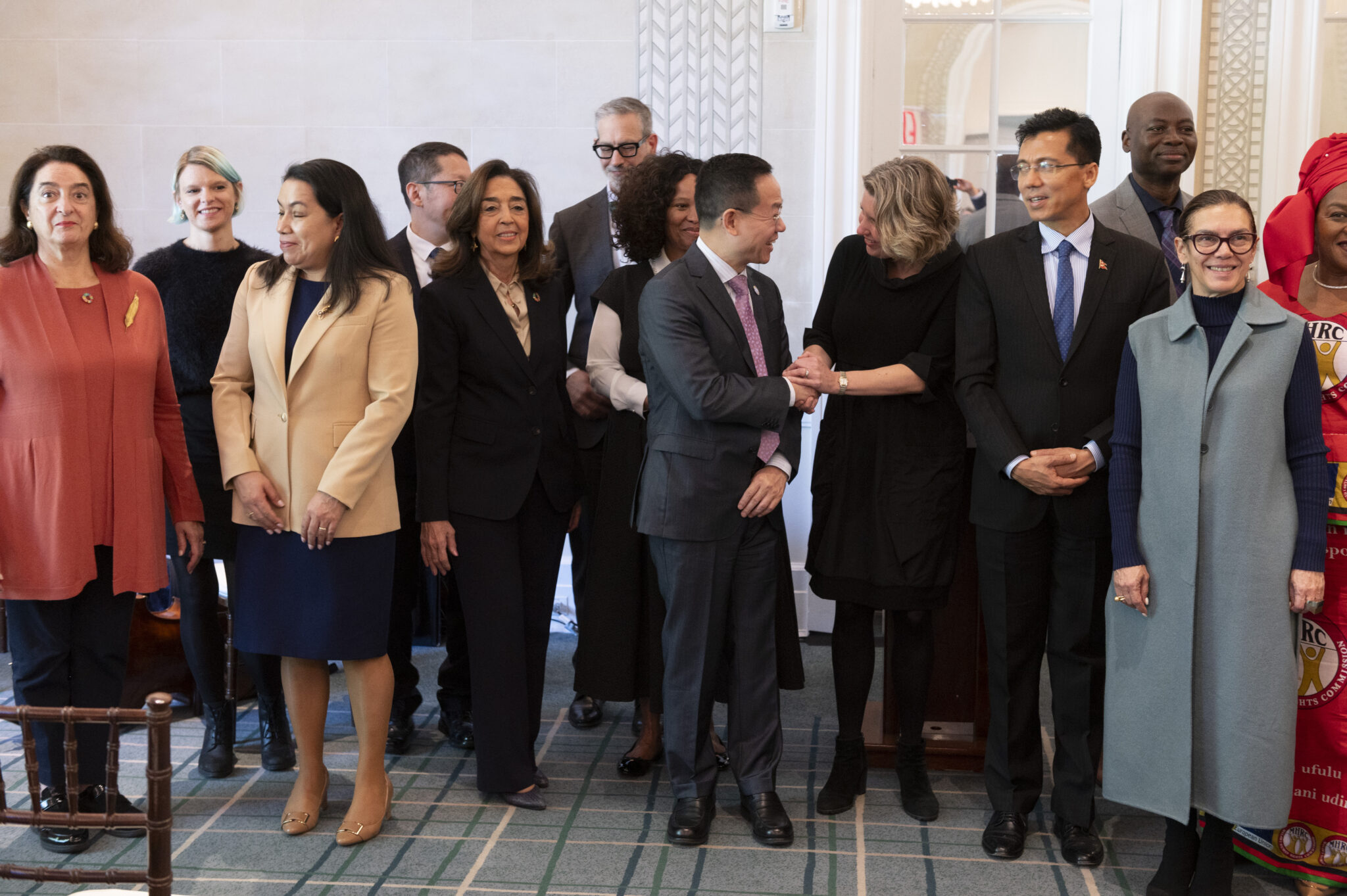
On October 16th, the NY Sun Works team was honored to join the United Nations Food and Agriculture Organization (FAO) at the New York Botanical Garden (NYBG) in celebration of World Food Day, a global occasion that serves to elevate discussions and unite voices around food systems and security on a worldwide stage. This year, representatives from UN member countries, the UN System, the New York Mayor’s Office of Food Policy, the NYBG, and NY Sun Works came together to share and learn about these critical topics and highlight the importance of leaving no one behind. By harnessing the power of collective action, World Food Day serves as a call to action, empowering us to work together toward a world free of hunger and one where regular access to healthy, fresh food is a guarantee for all.
This year’s theme was “Water is Life, Water is Food. Leave no one behind,” which highlighted the connections between urban food systems and food security, and their linkages to water. In light of this, we were proud to have Melissa Laudenbach, our Controlled Environment Agriculture (CEA) Operations and Curriculum Coordinator, speak on our behalf. As a member of both our Grow Support and Education Teams, Melissa shared her insights on the reality of implementing climate education and sustainability science in an urban environment like NYC. In accordance with this year’s theme and its emphasis on accessibility and inclusion, Melissa also spoke about how using hydroponics to equip high school juniors and seniors with CEA farming techniques can shape both their individual and collective futures. These marketable technical skills will allow them to pursue green careers in growing fields like sustainable urban agriculture, breaking down barriers to entry for students from low-income communities. She also shared how working with some of the over 1,000 partner teachers we have trained has had an exponential impact on the sustainability of New York’s future, resulting in quality climate education opportunities for tens of thousands of NYC students.
Through our work using water-based hydroponic farming to implement an engaging sustainability science curriculum in NYC public schools, we’ve learned firsthand the significance water can play in the production of food and food systems. Hydroponic farming uses up to 90% less water than traditional soil agriculture, and its vertical and space-conscious design allows it to easily adapt to the landscape of an urban environment. By connecting students with early and consistent exposure to sustainable technologies and the science that powers them, our goal is to equip students with the knowledge and experience they’ll need to navigate a climate-altered future. Whether they’re monitoring systems for their water levels, checking crops for pests, or recording their findings with pen and paper, students in our program are encouraged to foster a sense of scientific inquiry as they explore how the plants they’ve grown mirror the impacts of real-world climate change. In doing so, we hope they’ll feel emboldened to take action in their classrooms, households, and communities.
As our community of sustainable farmer-scientists continues to grow to over 300 partner schools, the number of students we’re impacting has flourished as well. We envision a New York City where every school boasts a Hydroponic Classroom, and where farmer-scientists across the five boroughs learn about the environmental impacts of their daily decisions through the magic of hydroponic farming. Every student deserves a sustainable future, and with each new teacher trained, comes the thousands of students whose lives will be impacted by this new approach to STEM education. Climate change may impact each of us differently, but our responsibility to understand and protect our planet remains the same. And thanks to the success of occasions like World Food Day, we’re closer than we’ve ever been to the sustainable New York of tomorrow.
Blah
NYHispano: Congresista otorga $800,000 para proyectos comunitarios de New York Sun Works
El congresista Ritchie Torres (NY-15) otorgó hoy $800,000 en fondos para proyectos comunitarios a New York Sun Works, una organización local sin fines de lucro dedicada a integrar la ciencia de la sostenibilidad y la educación climática en las escuelas urbanas K-12.
Blah
SloanFoundation: Introducing New York City’s Next Generation of Farmer-Scientists
New York Sun Works teaches K-12 students across the five boroughs the science of sustainability through hands-on urban farming.