TESTING donation page
NBCNewYork: Using Plants and Farming to Teach NYC Students About Climate Change
Students at a school in Harlem are learning about climate change through hydroponic farming. NBC New York’s John Chandler reports.
Blah
The Results Are In: Our Hydroponic STEM Kits Are A Powerful Hands-On Learning Tool
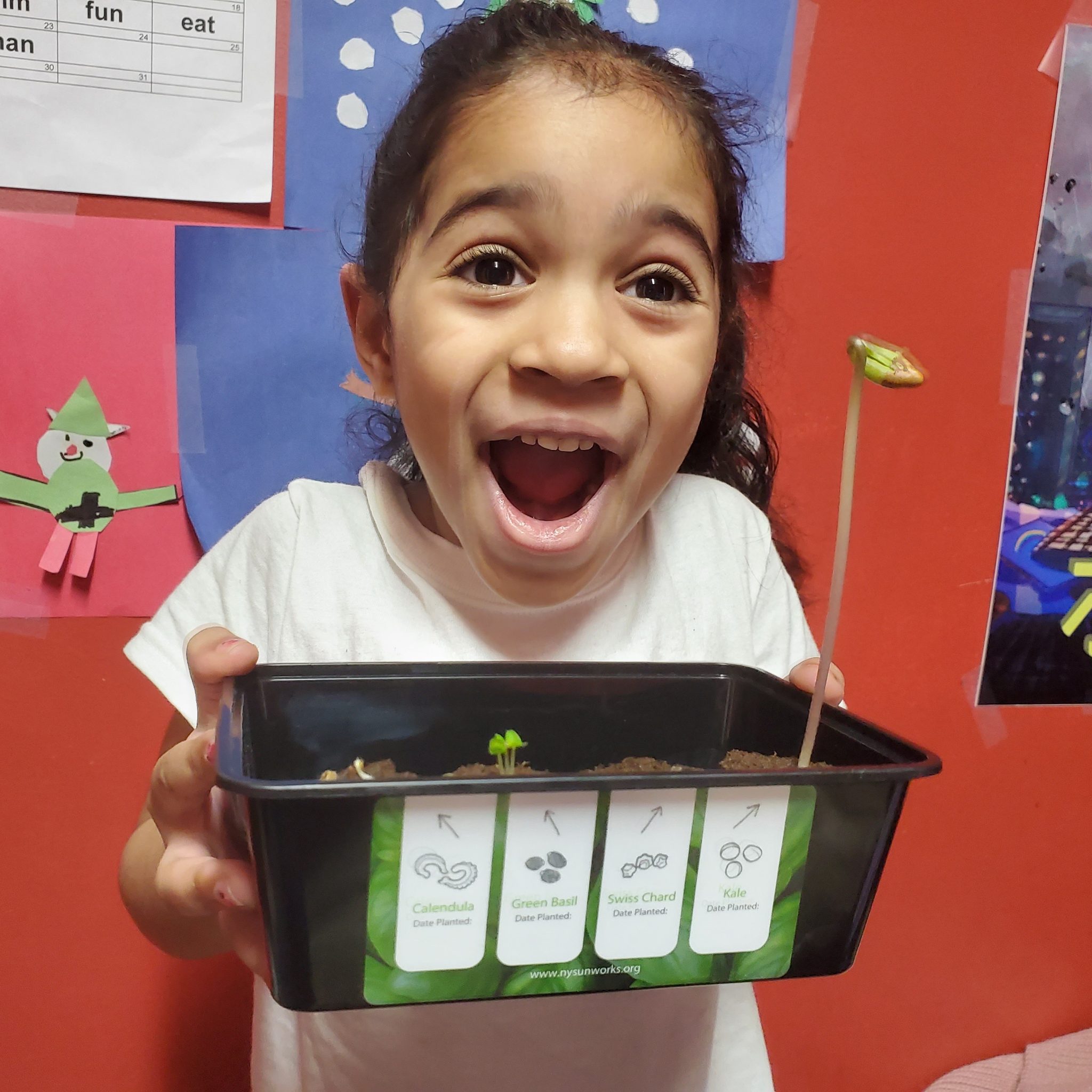
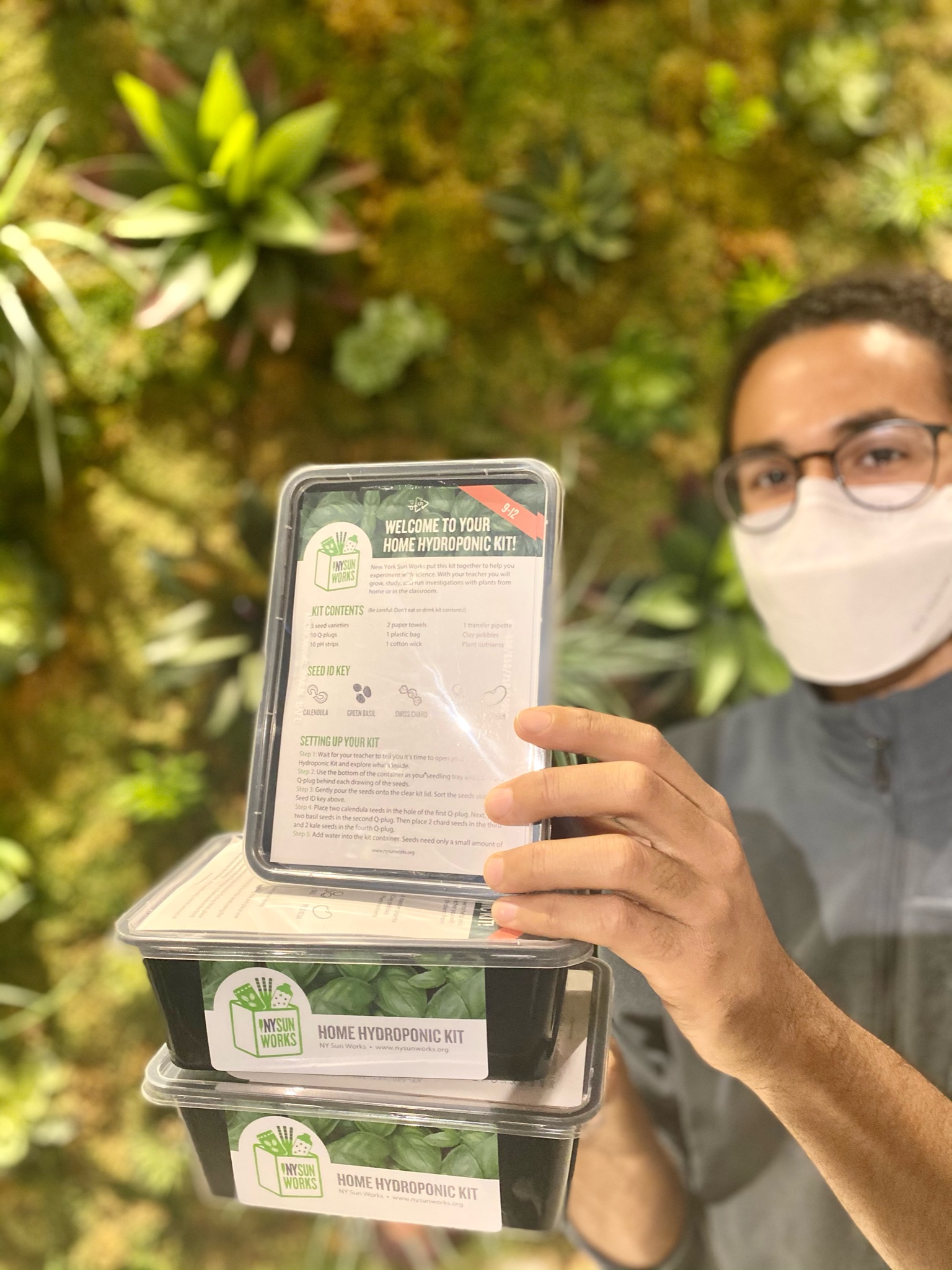
Earlier this year, NY Sun Works partnered with Knology, a social science research organization, to assess the impact of our Home Hydroponic STEM Kits and Discovering Sustainability Science curriculum. We introduced the STEM Kit program in September 2020 to support hands-on science and sustainability teaching during remote and hybrid learning; between September 2020 and March 2021, our team assembled and delivered 12,500 kits to students from 79 schools!
We’re now thrilled to share the exciting results of Knology’s study: the Kits and curriculum conclusively bolster science knowledge and critical thinking skills and nurture students’ social-emotional well-being. As the Knology report, Impacts of NY Sun Works’ Discovering Sustainability Science, states, “At their core, the Discovering Sustainability Science curriculum and the Home Hydroponic Kits embody innovation, flexibility, hands-on learning, and critical thinking that meet the challenges of an uncertain education landscape created by the COVID-19 pandemic.” Further, “the NY Sun Works team was the engine for innovation and creativity in envisioning a resource that could cultivate students and educators during the pandemic.”
Download and read the full Knology report here: Impacts of NY Sun Works’ Discovering Sustainability Science
Knology’s evaluation incorporated interviews, focus groups, and a written survey encompassing all grade levels (elementary, middle, and high school) and a mix of new and returning teachers, to ensure a broad range of teacher feedback. Across all cohorts, teachers unanimously reported that the curriculum and kits effectively helped students learn science concepts and sparked students’ curiosity, creativity, and problem-solving skills. One teacher captured students’ overall response with the comment, “every time we did a lesson they wanted more.”
Teachers observed that having a plant to nurture at home provided much-needed social-emotional support in a trying time, giving students something positive to focus on and creating a sense of continuity for students who had previously used the Greenhouse classrooms at school. The benefits extended to students’ families, generating enthusiasm about using the kits and caring for the plants, and creating a shared learning experience and activity to participate in together during quarantine.
Teachers also reported that students became more curious about science in general, including expressing an interest in pursuing science-related activities in the future, and that the kits helped students feel more connected with nature — particularly important in a time when access to green space was highly limited.
We want to thank the NY Sun Works team for their incredible work developing, assembling, and distributing these valuable resources, and our thanks to Knology for their insightful report, which can be accessed here, and to our partner teachers for taking the time to provide such helpful feedback. The kits are back as a learning resource this year, and for more on how to order, please click here.
Blah
Community-Based Hydroponics: a NYPA, UPROSE, and NY Sun Works Initiative
On August 13th, NY Sun Works was joined by UPROSE and the New York Power Authority (NYPA) to celebrate the launch of our first-ever community-based hydroponics lab, in Sunset Park, Brooklyn. UPROSE is an intergenerational, multi-racial, nationally-recognized, women of color led, grassroots organization that promotes sustainability and resiliency through community organizing, education, leadership development and cultural/artistic expression in Brooklyn. Elizabeth Yeampierre, Executive Director of UPROSE, has an energy and passion that is palpable, and her words resonated with everyone attending the ribbon cutting ceremony that evening:
“We know climate change is going to disrupt food systems and supply chains. Partnerships like this are central to building the local knowledge necessary to address a common threat. This partnership provides a hands-on opportunity for our community, especially our young people, to learn to grow food locally.”
The lab is funded by NYPA, whose support has been instrumental throughout the four years of partnership with NY Sun Works.
“The New York Power Authority is pleased to spearhead and fully support this unique learning environment that offers community members the opportunity to engage in sustainability and nutrition activities by growing food locally,” said Gil C. Quiniones, NYPA President and CEO.
More than 50 community members, activists and government officials gathered at UPROSE in Sunset Park, Brooklyn. Attendees enjoyed local, culturally relevant food, music by Bomba Yo, dancing, harvesting activities, and of course, the official cutting of the ribbon!
The launch of the lab comes on the heels of a recently released assessment report by the United Nations’ Intergovernmental Panel on Climate Change which warns that strong and immediate reductions in greenhouse gas emissions are needed to limit the average global warming increase to a maximum of 1.5 degrees Celsius (about 2.7 degrees Fahrenheit) in the next decades. Yeampierre said that climate change will disrupt food systems and the UPROSE lab represents an opportunity for communities to learn and embrace innovative and alternative systems.
Blah
Welcome Back from Manuela
Schools are starting up — and so are our labs! Across the city and in NJ, students will finally be back to learn and farm in their hydroponic classrooms after a year away due to Covid. Last year, we had the privilege of operating many of our labs as indoor farms while schools were closed, providing students and the local community with freshly-grown produce. Now, we’re especially excited to welcome back returning students and to welcome for the first time students, teachers, and school staff in our 34 new partner schools. To our 170+ partner schools, we hope you’re ready to learn and grow!
Behind the scenes, the NY Sun Works team has been working through the summer to get ready for the start of school. Our Greenhouse Support Team built 34 new labs and made sure all of the active labs are in prime condition for the first day of school. Our Education Team expanded and revised our K-12 Farming Foundation unit, the introductory unit that takes teachers and students through how farming works inside the Greenhouse Classrooms, to make it even stronger and more user-friendly. And that’s not all: we’ll launch our expanded middle school curriculum and new high school units in Biochemistry later this fall, and will be hosting additional professional learning seminars to continue to support our partner teachers. As if that wasn’t enough, 25 additional labs are scheduled to be installed by the end of 2021.
To everyone — teachers, administrators, school staff, and especially the student farmer-scientists – we wish you a safe, healthy, and productive school year. Welcome back!
Blah
Hydroponic STEM Kits Will Be Back This Fall!
“When I get a hydroponics kit and become a farmer scientist I will be feeling excited because it’s been so long since I’ve done science. I think I will learn a lot about plants and what they need to grow.”
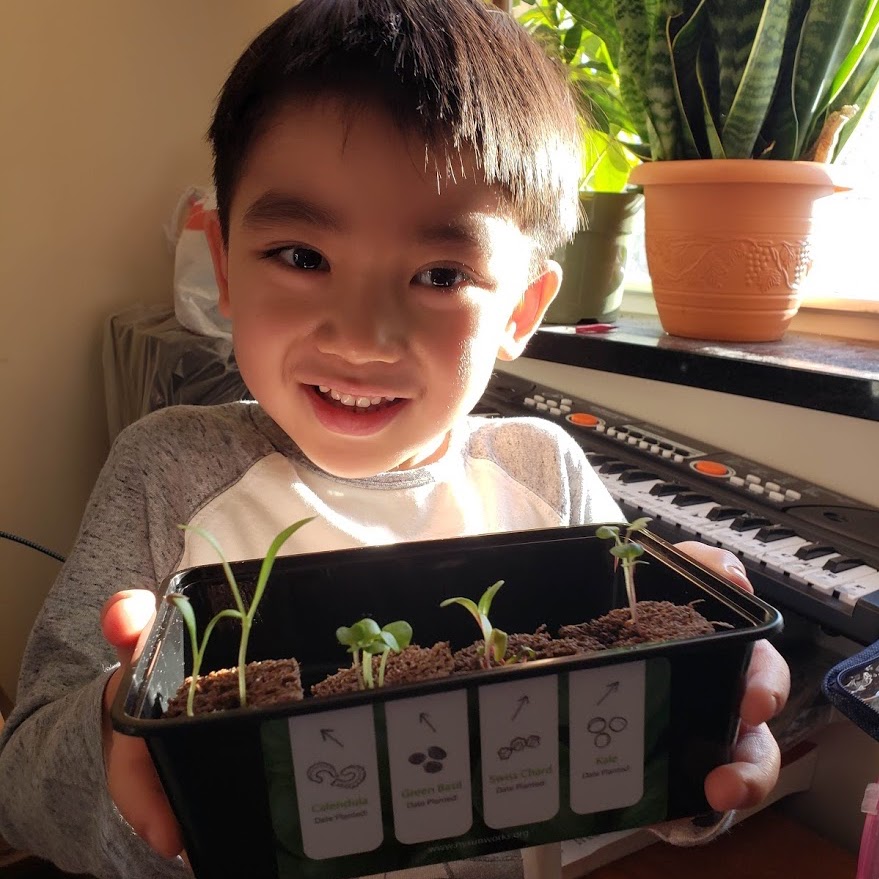
Looking for a compact and hands-on way to teach science in the classroom? NY Sun Works has the answer. By resounding request from teachers across our partner schools, our Hydroponic STEM Kits will be back in September as a project-based resource for science & sustainability education. Paired with our kit-specific science lessons, students can use the kits to study and run science investigations as well as practice observation, data collection, and other critical STEM skills — all while growing edible greens and beans! Pre-order and more information will be coming in early August.
We launched the Hydroponic STEM Kit initiative in September 2020 as a way to support remote learning during Covid. Now, having assembled and delivered 12,500 kits to students across 79 schools, we’re so happy to have created a learning tool that supports both classroom and remote learning and we look forward to seeing what students grow next year!
Blah
Update on the State of the Schools for 2021-2022
Congratulations to all of our partners for an enormous effort in what has been a very challenging year. Our hearts are with those who lost loved ones or nursed sick friends and family members over this past year and we extend our deepest wishes to all for a joyful, restorative, and healthy summer.
Looking forward to the fall, we are excited to work with all of our partner schools to restart your labs so that you are able to welcome your students back in September with a beautiful green space and the hands-on, project-based learning that is best suited for helping students overcome Covid learning loss. For those schools that kept their labs closed this past year due to social distancing requirements, our Greenhouse Support Team will schedule visits to assess supplies and determine what is needed to get your systems growing again. We are excited to have all of our partner school labs open and ready to welcome students and teachers for a new year of learning, growing, and harvesting!
For those teachers who need a refresher after a year of hybrid teaching, and for those who just want to take a deeper dive into our curriculum, our education team will be holding virtual Professional Development sessions prior to the start of school. Be on the lookout for registration information in early August. We want to make sure that our partners have all of the support you need for the new school year, so please do not hesitate to reach out if there is anything our team can do to help you plan for the new school year.
Throughout the summer, our team will continue to build hydroponic labs in new schools, including Art & Design High School, the Brooklyn Occupational Training Center, the 30th Avenue School in Queens, and PS 188 Michael E. Berdy. In September we will be starting the new year with more than 30 new partners – we are thrilled to have them join the NY Sun Works network.
From all of us at NY Sun Works, thank you for all you’ve done to support New York’s students this year and have a wonderful summer!
Blah
Hydroponic Kits, A Class, A Community: An Interview with Wendy Rodriguez
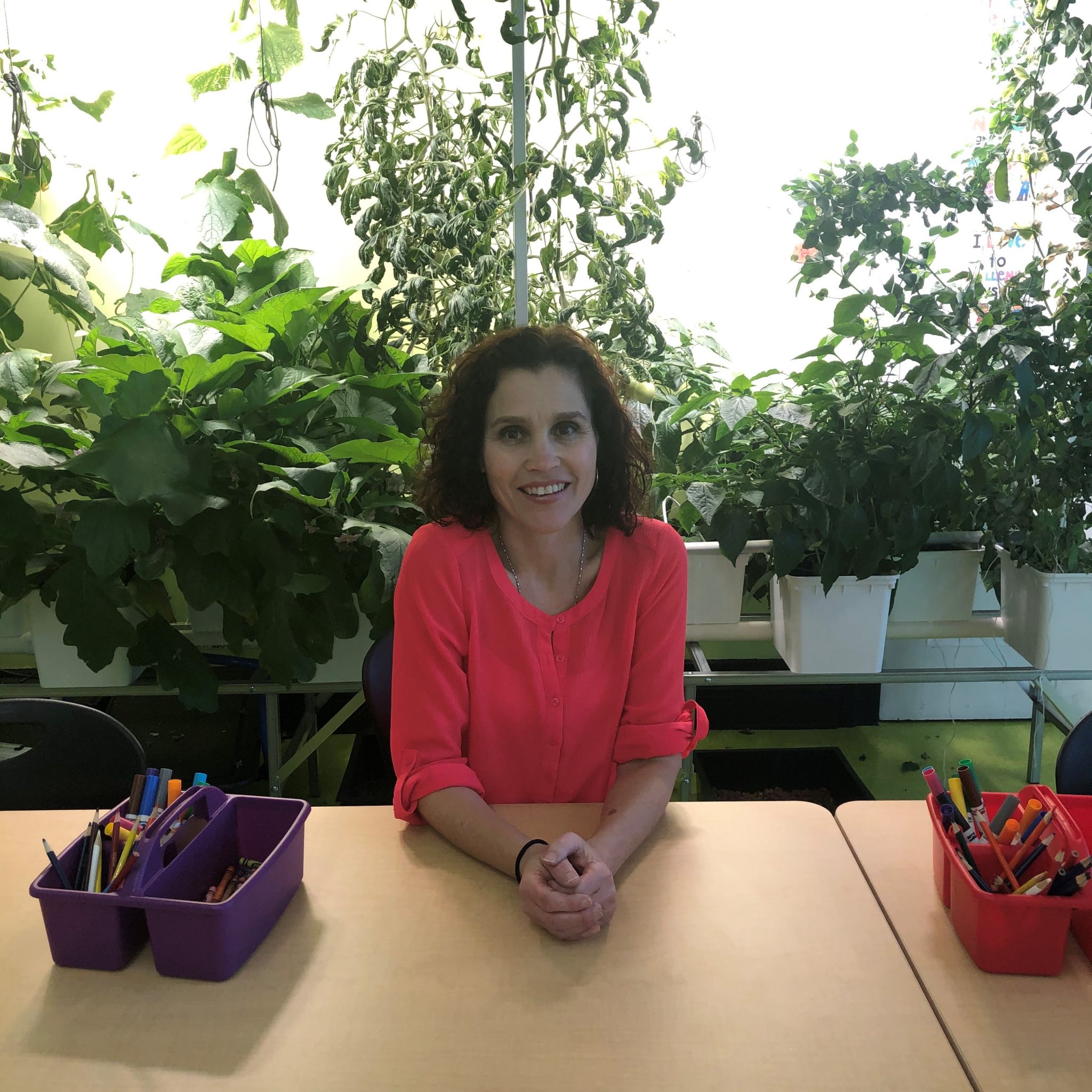
From growing beans and calendula, lettuce and celery, and even germinating blueberries and pumpkins, it’s been a busy year for Wendy Rodriguez’s students at PS 176 The Ovington School, in Brooklyn. Although the majority of her students – she teaches kindergarten through 2nd grade – were learning from home throughout the school year, the lack of a formal classroom didn’t stop these farmer-scientists from exploring, investigating, and farming from window sills, tables, and desks at home.
She spoke with us in May to share some of the highlights and lessons learned over this past school year.
The kids loved working with the kits!
The kids have become so passionate about what they’ve grown. They’ve had some amazing successes — plants with really thick stems, beautiful calendula flowers, beans. Sometimes kids don’t want to eat what they’ve grown because they’re so proud of the plants and become attached to them.
They’ve gotten creative with repurposing household materials . . .
Students learned to work with what they had at home — water bottles, milk cartons, even a toilet paper roll cut in half – for transplanting the plants when they got too big for the hydroponic wick system.
. . . And with reusing food scraps to grow food without buying seeds!
Kids went beyond what they had in the kits to grow vegetables and fruit from food scraps at home. Some grew celery, lettuce, and green onion plants from the leftover plant bases, and a few kids even germinated blueberry plants, avocados, mango and pomelo plants! One student, with a very green thumb, germinated oranges, pumpkins, and green peppers, all from leftovers!
Not everything worked but the failures are important too . . .
Sometimes plants didn’t grow, but those failures are important too, because it’s important for kids to understand that it’s okay when something doesn’t work out and to know that growing plants isn’t easy.
. . . And unplanned lessons are just as important as the planned ones!
We learned together that it was more difficult to grow the plants in the winter months, when there was less natural light and drafts from the windows. We’re having more luck growing again this spring, with better sunlight and warmer weather.
The kits inspired experiments and investigations . . . .
One 2nd grader tested the effect of temperature on plant growth by placing one plant in a heat tube and the second in front of an open window. Another student compared the effect of using fresh versus fish waste water on bean plant growth (fish waste wins — the waste provides important nutrients!).
. . . And helped create a remote community
Parents shared growing tips with Wendy, kids shared growing tips with one another, helping everybody learn and connect even when they couldn’t be together in person.
In all, shared Wendy, “it’s been a challenging year but we made it work. Kids are resilient — they adapt more easily than adults.”
Thank you, Wendy, and to all our partner teachers for the tremendous work you do, this year and every year!
Blah
School Harvests Across New York
School closures and social distancing requirements made it hard for students to visit their hydroponic labs this year. But in many of our partner schools, the hydroponic systems were still going and the delicious harvests continued to be put to good use. Thanks to generous support from our funding partners, hundreds of pounds of healthy, fresh greens were shared with students, their families, school staff, as well as local food pantries and community organizations, to support food security during a difficult time. Shared one community organization, “The greens were just FABULOUS and oh so fresh. Our clients were so happy to receive some healthy options during this time, especially our seniors.” Read on for more on this initiative.
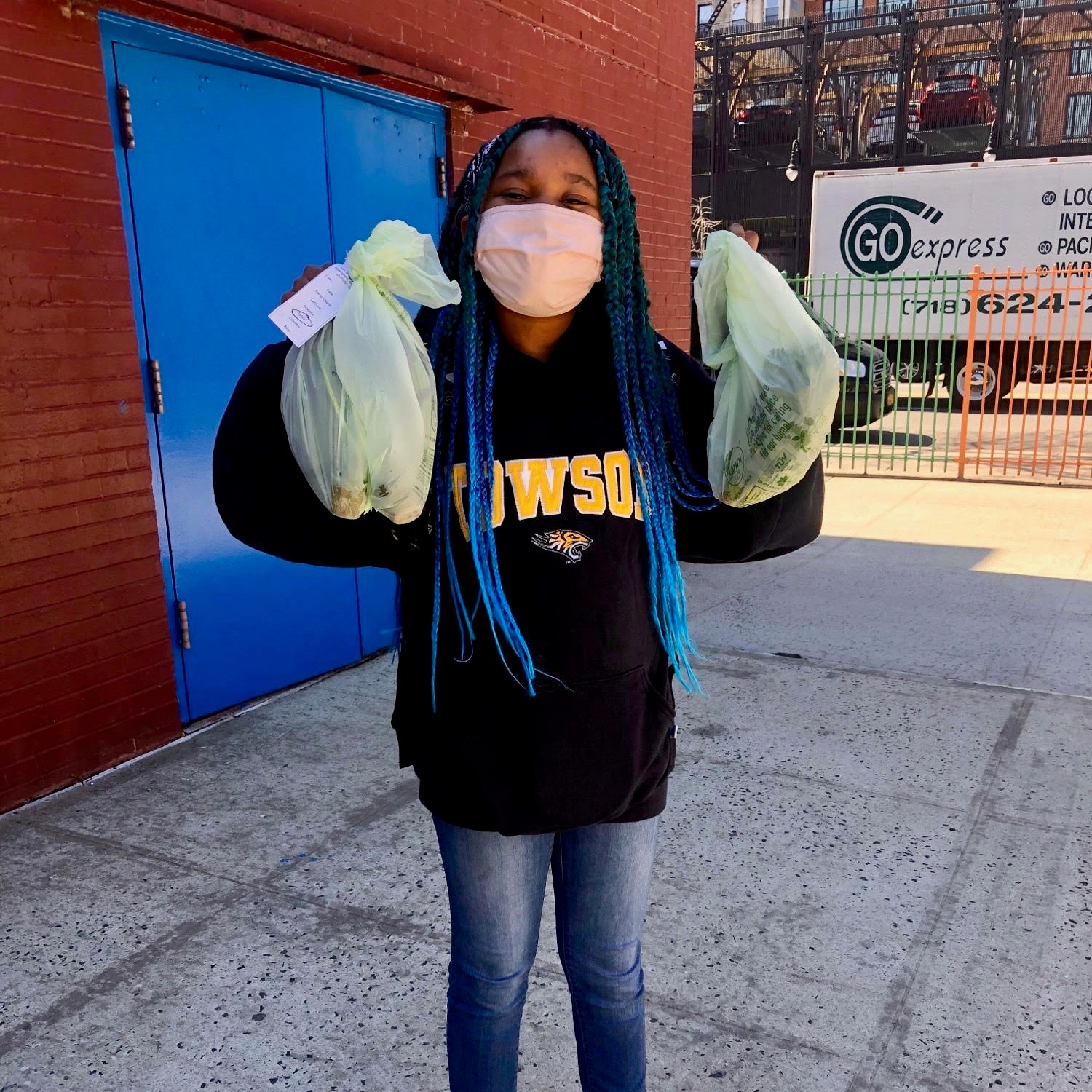
At PS 20 Anna Silver Elementary on Manhattan’s Lower East Side, regular harvests of basil, lettuce and snap peas, along with the occasional beautiful (and edible!) marigolds and dahlias, were shared with the school’s students and their families throughout the school year. PS 20, along with four other Manhattan schools, were able to keep their hydroponic systems going and distribute their harvests thanks to generous funding from Borough President Gale Brewer’s Manhattan Community Award Program Grant, which supported growing food for the school community during this year of Covid-19 challenges.
In Astoria, Queens, PS 171’s hydroponics teacher harvested nearly 20 lbs of greens, including kale, Swiss chard, arugula, basil and parsley, in the month of April alone! The Vine Crop System was also overflowing with approximately 40 lbs of tomatoes and cucumbers and the delicious, fresh greens were shared with students, their families, and the school community. Funding to run the lab at PS 171, along with 7 other Queens schools, came from the Queens Delegation of the NY City Council, with particular support from former City Councilmember Costa Constantinides.
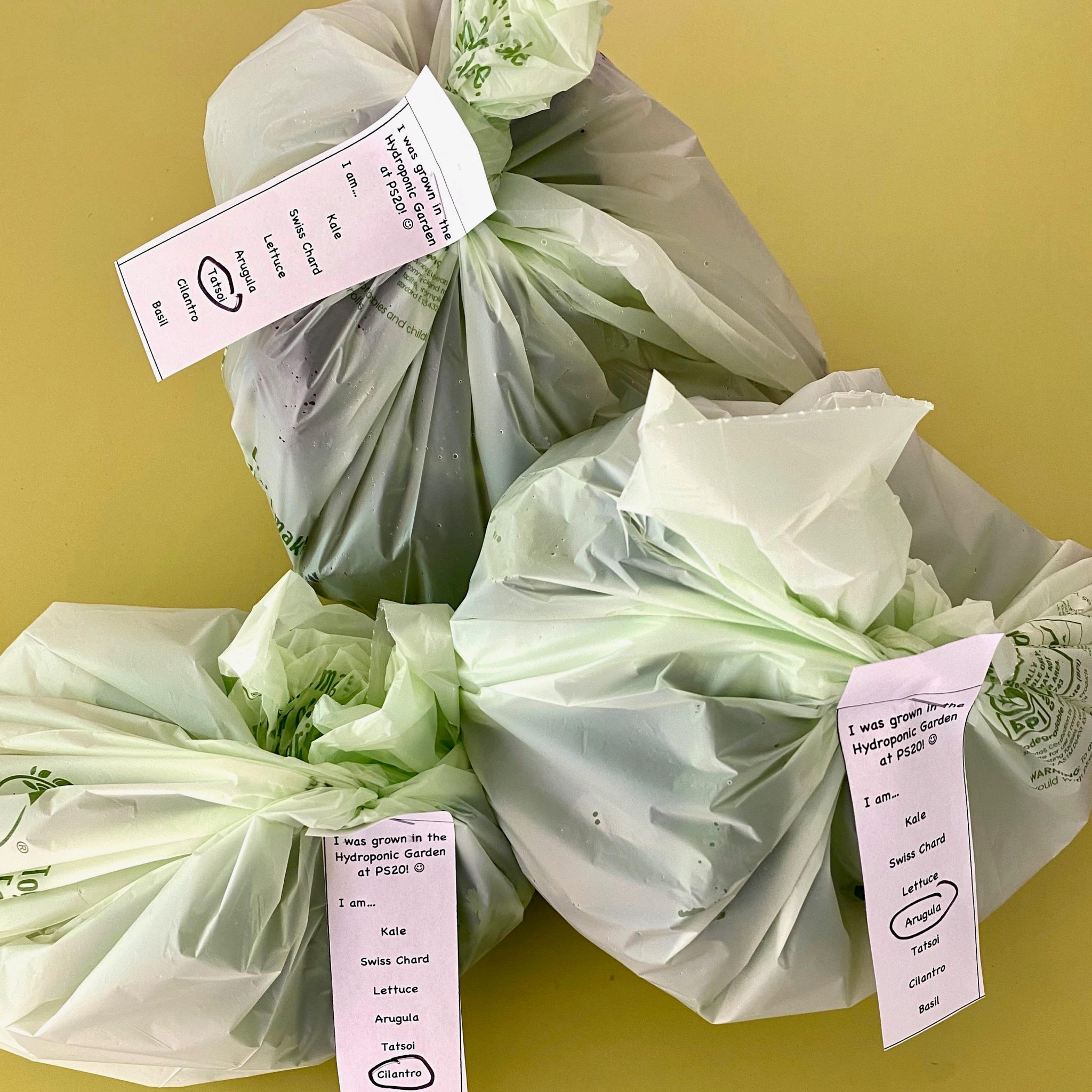
The New York Power Authority (NYPA)’s support has been instrumental throughout the pandemic for hydroponic lab operations and the distribution of Home Hydroponic Kits at 15 schools in the Bronx, Brooklyn, Manhattan and Queens.
Additionally, a grant from the US Department of Agriculture has helped to keep hydroponic labs running in schools in the East New York and Canarsie sections of Brooklyn. At High School for Medical Professions, one large harvest of greens including collards, kale and chard, was donated to the Children of the Light food pantry and other harvests were enjoyed by the school community.
Thank you to our partner schools, to our amazing Greenhouse Support Team for keeping the hydroponics systems running and the crops growing, and especially to Gale Brewer, Costa Costantinides, The New York City Council, NYPA, and the USDA for helping to make this important work possible in such a challenging year.
Blah
Students Share Science Research and Message of Resilience in NY Sun Works’ 10th Annual Discovering Sustainability Science Conference
On May 19th, students from public schools around NYC came together virtually to share their research and celebrate their scientific accomplishments at NY Sun Works’ 10th Annual Discovering Sustainability Science Youth Conference.
The Conference, typically hosted at Symphony Space to accommodate the large audience, was presented in an online format again this year due to continuing restrictions imposed by COVID-19. The virtual setting didn’t tamp down the enthusiasm or energy of the students, all of whom showed impressive perseverance in shifting gears and continuing their months-long research projects from home under the remote guidance of their teachers.
“I was able to have them watch it in class today and they were really excited to see their work featured and a ton of kids want to volunteer in the greenhouse next year,” said Ginny Sullivan, a teacher at Edward R. Murrow High School. “So watching the youth conference really motivated them.”
The 37 student speakers, who ranged from 3rd to 12th grade, presented on an array of science and sustainability topics, studying how plants grow and what impacts plant growth and development over time. Students have been running investigations to study the effects of vitamin C, temperature, location, added nutrient levels, light, and caffeine on different types of plants ranging from beans to basil. Other students shared the many ways that they are taking action and making a positive impact on the environment from their schools and homes – from exploring innovative ways to combat rising carbon dioxide levels to designing their own hydroponic greenhouses for New York City.
The students were joined remotely by members of our Greenhouse Support Team and Education Director Hannah Jaris, with special guests Daniella Piper, Regional Manager in New York Power Authority’s Western Region and Chief Transformation Officer; and Danielle Corbin, teacher and author of the children’s book I Am A Mini Entrepreneur.
In what’s been a very difficult time for all, the voices of these students and guest speakers sent an inspiring message of resilience and determination. As Daniella Piper summarized in her moving talk:
“You and only you are the author of your life. Every significant thing that will happen to you, good and bad, are individual chapters of the book that you are writing. Taken all together they become your unique story. Like every good book, your life will have unexpected twists and turns, but if you remain true to your values, you might be surprised at the ending. So keep your eye on the prize, continue to be a student for the rest of your life, seek knowledge and ask yourselves, how can I make my family, friends, or even a stranger’s life, just a little bit better everyday?”
You can view the entire conference here.
Blah
Food Ed Coalition Spotlight: An interview with Megan Nordgrén
An interview with Megan Nordgrén, our Director of Program Development, was recently featured in the Laurie M. Tisch Center for Food, Education and Policy Food Ed Coalition Spotlight:
What are your interests and passions? How did they lead you to work at NY Sun Works?
I’ve always been passionate about the environment, which led me to work for various environmental non-profits and part of the U.N. Oceans programs. It wasn’t until my children started public school in NYC that I noticed science, sustainability, and nutrition education were lacking within the public school system. NY Sun Works allows students to learn science through urban farming. It has been a pleasure to see the positive impact NY Sun Works has had on these students for the past 3.5 years I have worked there.
What impact does NY Sun Works have on food and nutrition education practice and policy?
Our hydroponic science labs have a wonderful by-product of nutritious and delicious vegetables! Students can grow vegetables right in the classroom, which gives them the ability to learn about healthy foods and share the information they learn with their families. Through NY Sun Works, students are given the tools needed to make choices that will better their health and the environment.
Describe a “day in the life” at NY Sun Works.
With a staff of 20 people, it’s pretty much always “all hands-on deck!” During the week, most of our staff make weekly visits to more than our 130 partner schools to work with teachers to ensure the hydroponic labs run smoothly. Our education team works on developing new curricula and training our partner teachers. Other program members work behind the scenes to help build partnerships with new schools, raise funds, and work on various administrative tasks.
What does a typical lesson by NY Sun Works look like?
The NY Sun Works curriculum follows the philosophy of learning through practice and experimentation. We utilize the hydroponic systems installed in our partner schools’ classrooms to teach science, environmental education, and sustainability.
How have your services changed since COVID?
NY Sun Works had to adapt to ensure our partner schools were still being supported during school closures. So our program made three significant changes to allow for children to continue to learn remotely. These three changes included: curriculum adaptation, home hydroponic kits, and feeding school communities through urban farming.
Curriculum Adaptation: Our program transitioned lessons to the online learning platform for remote learning, using Google Slides for students to have easy access in their Google Classroom. These slides allow children to engage in topics they would otherwise be learning in-person by way of NY Sun Works Reports, videos, and the new Let’s Investigate video series. Let’s Investigate videos are led by our staff and demonstrate how to set up investigations that explore topics like what plants need to grow.
Home Hydroponic Kits: Our program created a new Home Hydroponic Kit for students, with teacher guidance, to grow, study, and run investigations with their plants from home. The kits engage students with topics they would be learning in their Greenhouse Classrooms if it weren’t for the pandemic. These kits allow students to gain observational and data collection skills.
Urban Farming to Feed School Communities: Currently, most NY Sun Works labs in NYC schools are growing much-needed food for communities. Since many students cannot visit the Greenhouse Classrooms right now, the labs are being run as urban farms, and fresh vegetables are being grown to feed school communities. Students’ families and staff members can take nutritious vegetables home, and some schools are providing food to community organizations.
How can people support your work right now?
We always welcome donations, no matter how small, to support our school partnerships. Please visit https://nysunworks.org/get-involved/donate/ for more information. Thank you in advance! You can also follow us on Instagram, Twitter, and Facebook. And please sign up for our monthly newsletter!
What is your favorite local fruit or vegetable?
I have so many: asparagus, strawberries, spinach, and pumpkin!