TESTING donation page
Welcoming New Partners
After a long pandemic pause, NY Sun Works is excited to welcome new school partners! In the last few months, our team has installed hydroponic science labs in 10 new schools in 4 NYC boroughs and in New Jersey. The group includes four new high school partners: Boys and Girls High School in Bedford-Stuyvesant, Academy for Conservation and the Environment in Canarsie, Port Richmond High School on Staten Island and Weehawken High School in New Jersey. We also welcome one independent K-9th grade school, Allen Stevenson in Manhattan. New middle school partners comprise John Ericsson Middle School in Greenpoint and Mott Hall II in Manhattan. PS 85 Great Expectations in the Bronx, PS 158 Warwick in East New York and PS 9 Sarah Smith Garnet School in Prospect Heights are new elementary school partners.
The new builds are continuing at a pace of roughly 1 new hydroponic lab per week, with plans to complete 10 more labs before the end of the school year in June. This is keeping our Greenhouse Support Team very busy! Some of these soon-to-be partners include PS 18 Multilingual Neighborhood School in Greenpoint, IS 223 The Montauk in Borough Park, Satellite Academy High School in Manhattan, PS 380 John Wayne Elementary in Williamsburg, PS 75 Mayda Cortiella in Bushwick, George Westinghouse Career And Technical Education High School in Downtown Brooklyn, and PS 190 Sheffield in East New York. The construction pace will ramp up during the summer months when most schools are closed and we hope to be able to have another 20 labs ready to open for the start of school.
We welcome ALL new partner teachers to join us for a Professional Learning workshop on June 3rd to introduce them to the lab, the curriculum, and the NY Sun Works team. Invitations will be sent soon!
Blah
Open Schools, Open Labs
What a year it’s been! It’s wonderful to start to see more students and teachers back in schools, and many hydroponic labs in action. We feel such gratitude for the herculean efforts our partner schools have undertaken to keep their students engaged in learning. And we at NY Sun Works are proud that we have been able to support our partners in hands-on science learning, even from a distance, and provide nourishing food for communities. Despite the pandemic, nearly 60 NY Sun Works labs are currently operating, many with support from generous funders who have helped shore up struggling school budgets. A tremendous thank you to the New York Power Authority, Queens Delegation of the NY City Council, Manhattan Borough President Gale Brewer, Council Member Costa Constantinides, Council Member Reynoso, US Department of Agriculture and the DOE Office of Sustainability.
For those schools with labs that have had to remain closed this year, we look forward to working with you to plan for a Fall 2021 reopening. What better way to welcome students back than with beautiful green plants and the promise of exciting hands-on science learning. Our team will be reaching out soon to schedule a visit to assess your lab’s supplies and to ensure that your hydroponic equipment is in good working order for the next school year.
For our remote students – and also some students in school, but unable to visit their labs – we produced and delivered 12,500 Home Hydroponic Kits. Seventy-nine schools received kits and the accompanying curriculum, including 15 new schools that do not yet have hydroponic labs. We look forward to continuing these new partnerships!
We are thrilled that we have been able to begin installation of new hydroponic labs and welcome new partners! The School Construction Authority has released FY20 Capital Funds, allowing construction of new hydroponic labs – halted in March 2020 – to get underway again. Projects are well underway now and plans are in place to complete most of them prior to the start of the 2021-22 school year. And please stay tuned for FY21 Reso A lab information, which will be coming soon! Our NY Sun Works network of schools is growing in exciting ways.
Blah
NY Sun Works Provides 12,000 NYC Students With Home Hydroponic STEM Kits, Supporting STEM Learning, Social-Emotional Well-Being During COVID
NY Sun Works has provided 12,000 Home Hydroponic STEM Kits to NYC public schools this school year, supporting hands-on STEM education for K-12th grade students during remote and blended learning. The demand for kits far exceeded the initial expectation of 2,000 orders, showing the strong need for hands-on learning resources during the pandemic.
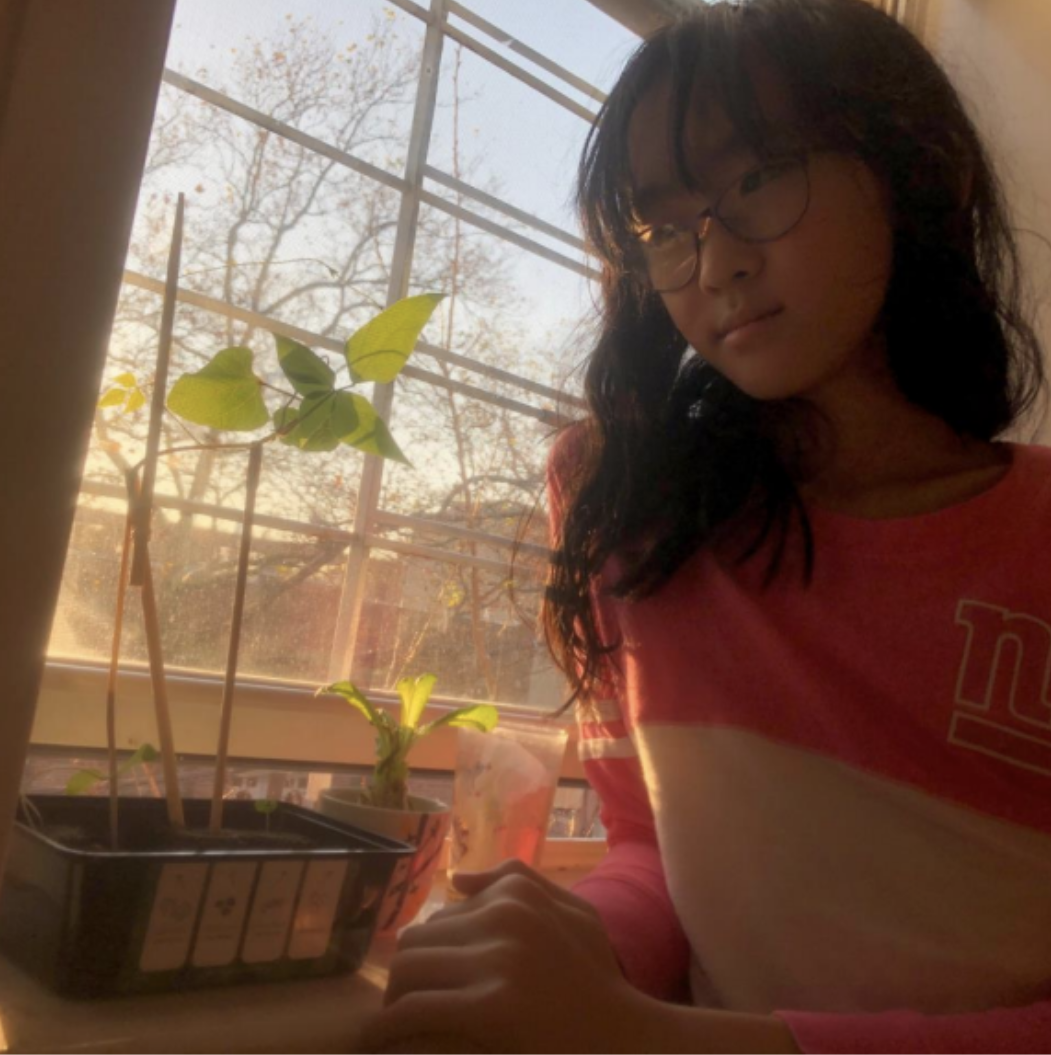
Shared one elementary school student from Queens, “When I get a hydroponics kit and become a farmer scientist I will be feeling excited because it’s been so long since I’ve done science. I think I will learn a lot about plants and what they need to grow.”
The kits were designed to engage students on science and sustainability concepts that they would otherwise learn at school. With teacher guidance and the kit-specific science lessons developed by NY Sun Works, students have been able to grow, study, and run investigations from home with edible plants as well as practice their observation, data collection, and other critical STEM skills.
Recognizing the anxiety COVID has triggered for many students – in particular for students in communities hit hardest by the pandemic – the hydroponic kit lessons also incorporate activities to foster social-emotional well-being. In addition to science lessons, students are tasked with observing and tending to their plants to help create a stabilizing daily routine and they regularly share their progress and challenges with classmates and teachers as a means to encourage conversation, collaboration, and curiosity. One teacher shared that the kits and curriculum have been a lifesaver, bringing joy and something to look forward to each day for students that have been struggling with remote learning and being stuck at home.
The kits are part of our larger efforts to address education needs emerging under COVID. Since the pandemic began, the organization has implemented several new initiatives to support teachers and students, including creating more than 3 months of weekly ready-to-use K-8th grade remote STEM learning modules for teachers in our partner public schools; developing over 50 Let’s Investigate science videos with experiments that students can conduct at home; and converting several of our Greenhouse Classrooms to indoor farms to provide produce for the school community and local food pantries.
NY Sun Works provided 4,000 of the kits at no cost to public schools that need financial support due to COVID-related budget cuts. Says Manuela Zamora, Executive Director of NY Sun Works, “NY Sun Works continues to innovate in the field of education while preparing youth for the challenges of the 21st century. Now more than ever, we are committed to providing quality science education regardless of student zip code or school budget.”
Blah
Take a Virtual Field Trip with NY Sun Works
The Education Team at NY Sun Works is excited to announce that we will be offering a new Virtual Field Trip package this Spring focusing on composting and its connections to STEM! The package will be available in early April and will include a set of lessons (with accompanying Google slide presentations) and virtual field trips to a rooftop Greenhouse Classroom and worm bin, and an outdoor composting facility. If you are interested in connecting with our Curriculum Specialists about the new virtual field package please indicate your interest here.
The Virtual Field Trips will allow students to visit and get a hands-on view when they are unable to have a hands-on experience. Each section of the Virtual Field Trip is accompanied by tables and Google slides to reinforce content. Students utilize these accompanying digital tools to record, model and draw conclusions from what they are seeing while demonstrating understanding for teacher evaluation.
K-5: Students are introduced to compost through the concept of a closed food cycle and the efficient recycling of nutrients using the nutrient cycle. Watching this process first hand, students will observe the decomposers and the process of decomposition through cellular respiration. Then, applying this knowledge to their own Greenhouse Classrooms, students learn and understand how these processes are used and maintained in our worm bins. To wrap up this unit, students will revisit the nutrient cycle, identifying decomposers and modeling their role in the ecosystem.
6-8: Students begin identifying decomposers and examining their trophic role in the ecosystem, particularly the role of cellular respiration in the decomposition process. Then, taking a closer look at the essential nutrients used by plants to support ecosystems, students examine how nutrient quality affects plant communities. Using this as a framework, students will see how worms, found in their Greenhouse Classrooms, are efficient decomposers. This will be reinforced by a close study of their anatomy through dissection. The students reflect on the role of these systems and organisms in their own lives as they grapple with the idea of landfills and the effects of their overuse.
9-12: Students are introduced to composting through examining the closed food cycle and the use of urban composting as a sustainable alternative in current waste management practices. Then, focusing on composting in a trophic system, students gather observable data on cellular respiration and the importance of aerobic decomposition for the ecosystem. Students then see the benefits of harnessing anaerobic decomposition and compare its effects on the carbon cycle to aerobic systems. Students will also hypothesize on the effects of our modern waste management practices on the carbon cycle, through modeling its movement (or lack thereof) through our spheres.
Blah
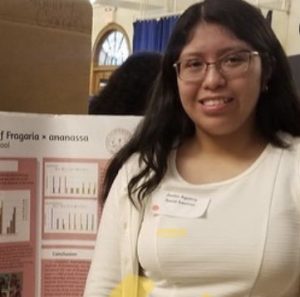
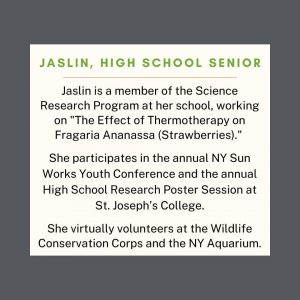
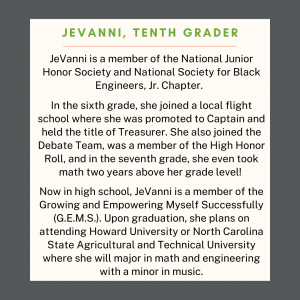
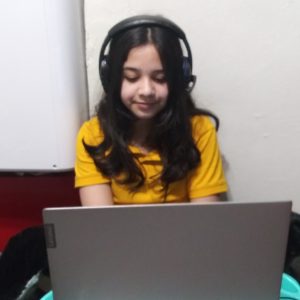
NY Sun Works Celebrates Young Girls in STEM
Thursday, February 11th, was the International Day of Women and Girls in Science, a day to honor women’s significant achievements in science and place a much-needed focus on girls entering Science, Technology, Engineering, and Mathematics (STEM) careers.
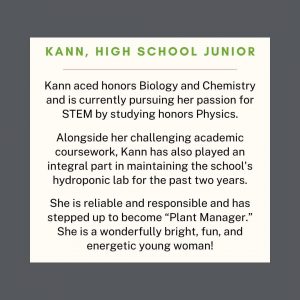
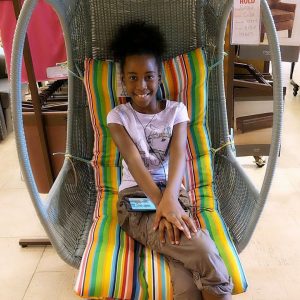
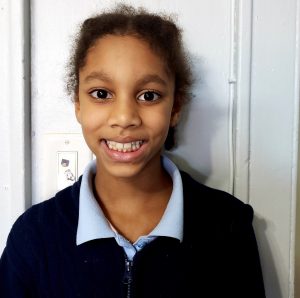
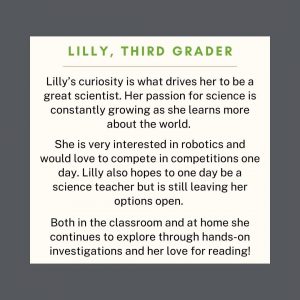
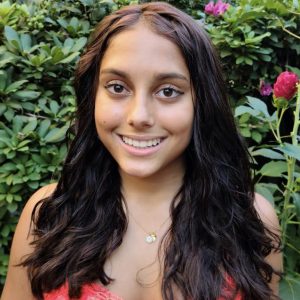
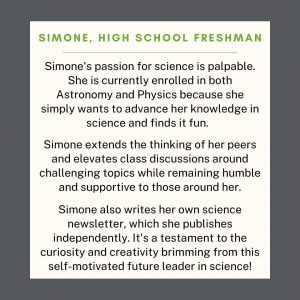
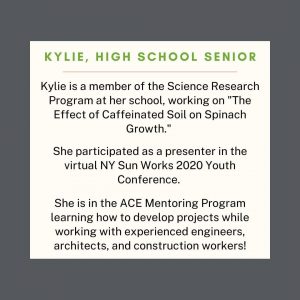
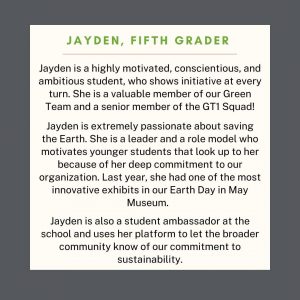
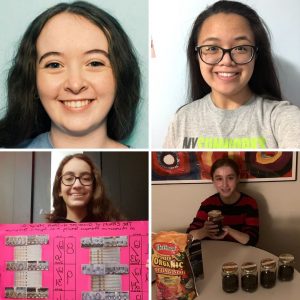
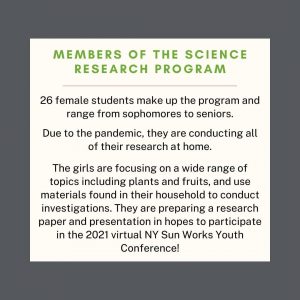
This special day served as an excellent opportunity to celebrate the incredible students in our partner schools! We decided to honor them in a social media content series and reached out to our teachers to nominate a young girl (or girls) who is pursuing her passions for science and STEM, who goes above and beyond expectations in her science studies, who has exceptional leadership qualities, or is otherwise inspiring!
The response was truly amazing. Teachers started emailing the evening we announced the campaign and continued to do so over the next few days leading up to February 11th, when NY Sun Works planned to unveil the young nominees.
We received a total of 17 nominations from 12 different schools ranging from grades 2-12. There were so many that we couldn’t fit them into one post!
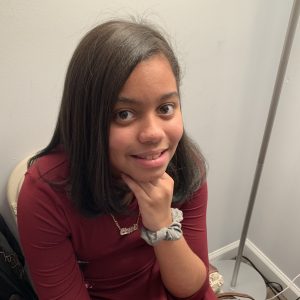
“Laylani is a great helper to her classmates when they have some difficulties understanding certain concepts. I’ve always noticed her willingness to help. It puts a smile on my face when I overhear her explaining a concept or the directions of how to complete an assignment. Her tone is always pleasant so her peers can receive her support. And her peers are always appreciative of her help.” – Mrs. Self, PS/IS 180M Hugo Newman
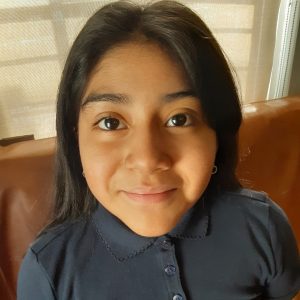
“Rihanna is a 6th grade student from University Prep Middle School. Her curiosity is always an asset during class time! Rihanna makes observations on how science is relevant to her own life, and is able to deconstruct the abstract concepts we learn and make them more concrete. I admire Rihanna for her optimistic disposition, curiosity, and constant desire to apply scientific knowledge to her world.” – Ms. Taylor, University Prep Middle School
Please read about all the nominees and their accomplishments below. We can’t wait to see how they change the world!








Blah
HechingerReportOpinion: Why School Shutdowns are a Disaster for Science Classes
Despite mounting evidence that schools are not turning out to be major incubators or vectors of Covid-19 transmission, New York City shut down its public school system in November. Such closures have a disastrous impact on education in STEM subjects: science, technology, engineering and math. Science in particular is extremely hands-on and almost impossible to grasp virtually.
Blah
Hydroponic Labs Running as Urban Farms to Feed Communities
Even with this year of school closures and uncertainty, more than half of NY Sun Works labs in NYC schools are currently operating to grow much-needed food for communities. With many students unable to visit the Greenhouse Classrooms due to social distancing requirements, the labs are being run as urban farms growing fresh vegetables to feed school communities. Students’ families and staff members are taking nutritious greens home, and some schools are providing food to community organizations serving neighbors in need.
Manhattan Borough President Gale Brewer generously awarded 6 schools Manhattan Community Award Program grants specifically for urban farming to address food insecurity during the Covid-19 pandemic. One of these schools, PS 48 in Washington Heights, is sending their lab’s frequent vegetable harvests home with students and their families as part of biweekly produce distribution from City Harvest and Brighter Bites. They are planning to do a virtual cooking event in the spring that will utilize some of the produce produced in the lab. At PS 333 Manhattan School For Children, the Greenhouse has been providing vegetables to 2 neighboring community organizations. And in Brooklyn, IS 239 Mark Twain has had such abundant harvests that they delivered a large crop of lettuce, kale, cucumbers and basil to a local food pantry.
NY Sun Works is honored to be able to work with our partner schools to provide much-needed fresh vegetables during this time of food insecurity for so many in New York City.
Blah
STEM Kit Photo Contest Winners
With the pandemic forcing our typically hands-on science students into their homes for blended/remote learning, this Fall, NY Sun Works provided at-home hydroponic STEM kits to our partner schools. The kits are designed to engage students in topics they would otherwise learn about in the Greenhouse Classrooms and enable students, with teacher guidance, to grow, study, and run investigations with plants and practice their observation and data collection skills at home.
This has been an exciting and rewarding project for the NY Sun Works team and when we first started shipping and delivering kits, we were exploring ways to see them in action with the students. So, what better way to do that than a photo contest on social media?! Once most of the kits were delivered we officially kicked off the contest. We communicated with teachers, parents and guardians and asked them to submit photos of their children with their STEM kits and plants.
The response was overwhelmingly positive. We got to hear (and see!) firsthand the genuine excitement the students felt now that they could nurture and grow plants again.
“Plants are everything,” Owais, a third-grader at PS 171 in Queens said. “Think of it; plants are paper, food, clothes, house and air. Plants provide us oxygen and without plants, we wouldn’t have clean air.”
“It’s exciting to see the seeds sprout and fun to see them grow,” said Gordon, who attends PS 176 The Ovington School in Brooklyn.
The contest ran for 6 weeks and prizes were awarded to winners chosen at random. Two grand prize winners will receive a Zero Waste Gift Basket and a Home Produce Delivery from one of our greenhouse classrooms! Other fun prizes include Melissa Clark’s new cookbook, Kid in the Kitchen, Eric Adams’ book Healthy at Last, a stainless steel lunch container, reusable food savers, a vegetable spiralizer, and an omelet maker! 
Blah
NY Sun Works: Stories From The Greenhouse Classroom Support Team
Click here to make a donation today!
Blah
BronxFreePress: Planting in the Pandemic – NY Sun Works Delivers STEM Hydroponic Kits to Students
No soil, no problem. Hydroponic growing systems use a mineral-based solution to nourish plants. Because no soil is needed, the kits are ideal for use in smaller space and urban environments. They also served as an ideal opportunity to bring science home for students working through the pandemic.