TESTING donation page
Can Project Based Learning Reduce Chronic Absenteeism?
It is a valid question that teachers across New York are asking: How can we as educators improve the lives of children if they are not attending class?
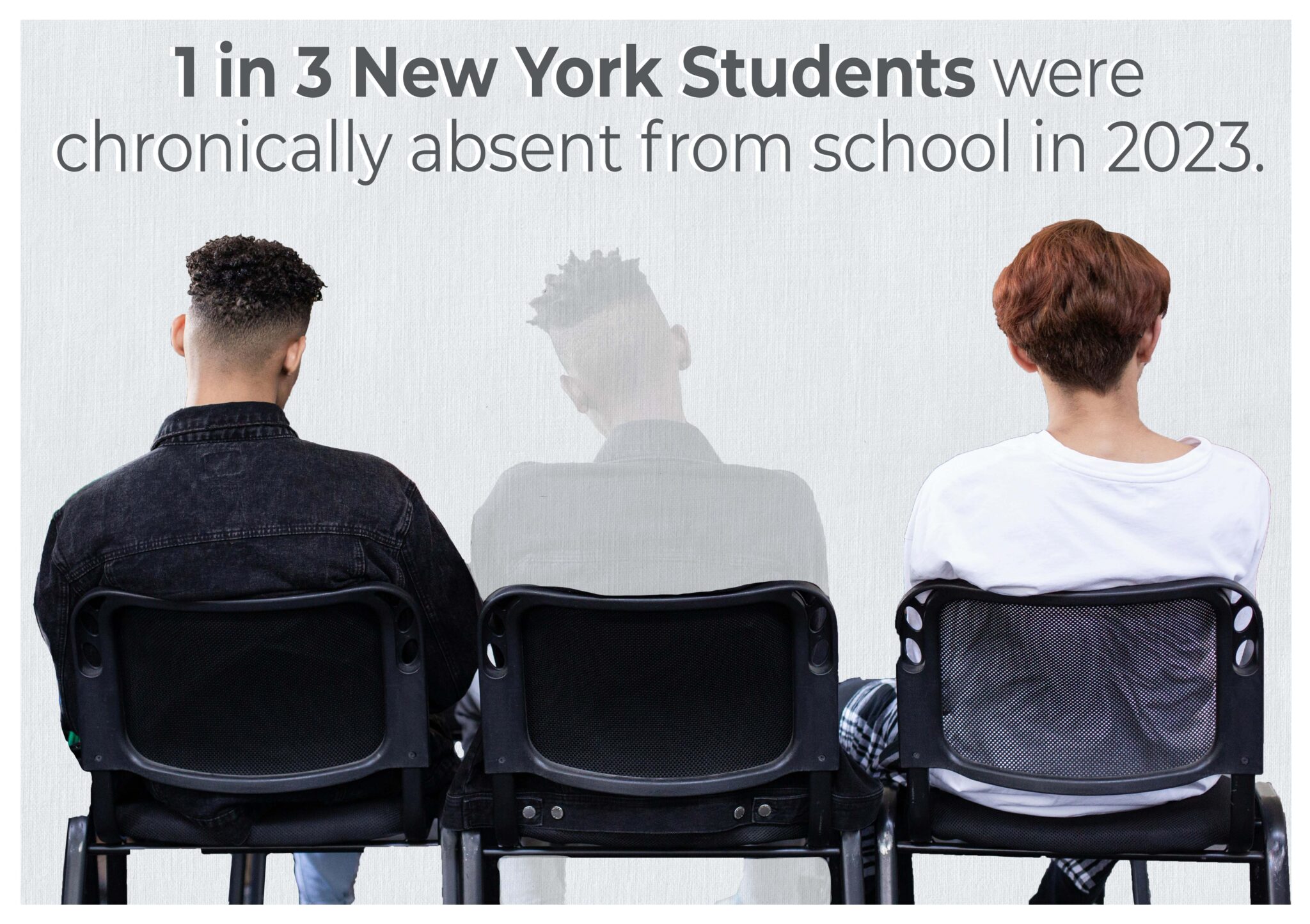
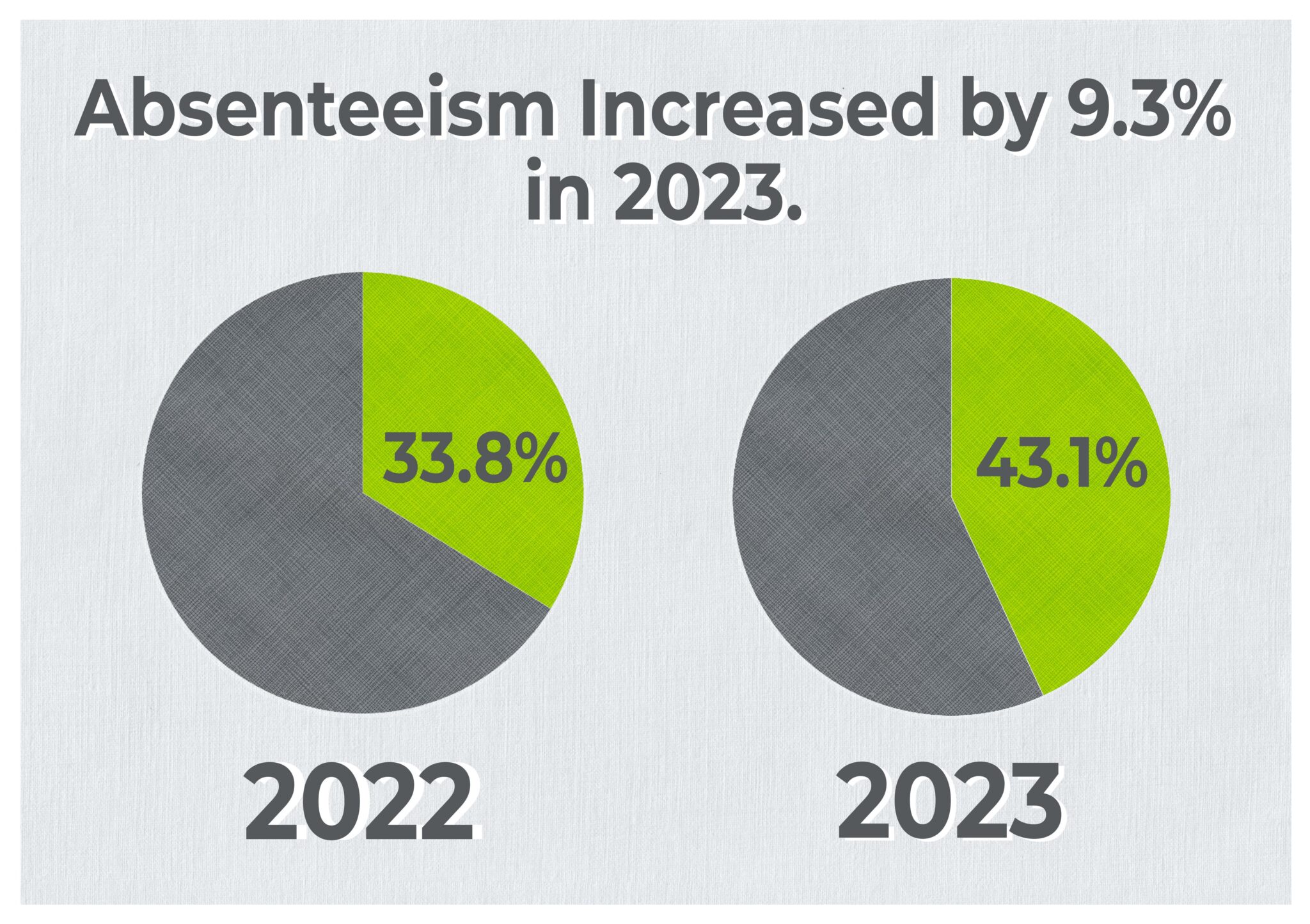
In the 2022-2023 school year, approximately 1 in 3 students across New York State were chronically absent from school.1 Shocking as this number sounds, the picture emerging from schools in our city is worse, with chronic absenteeism rates of 43.1 percent, an increase of almost 10% from the previous year.2
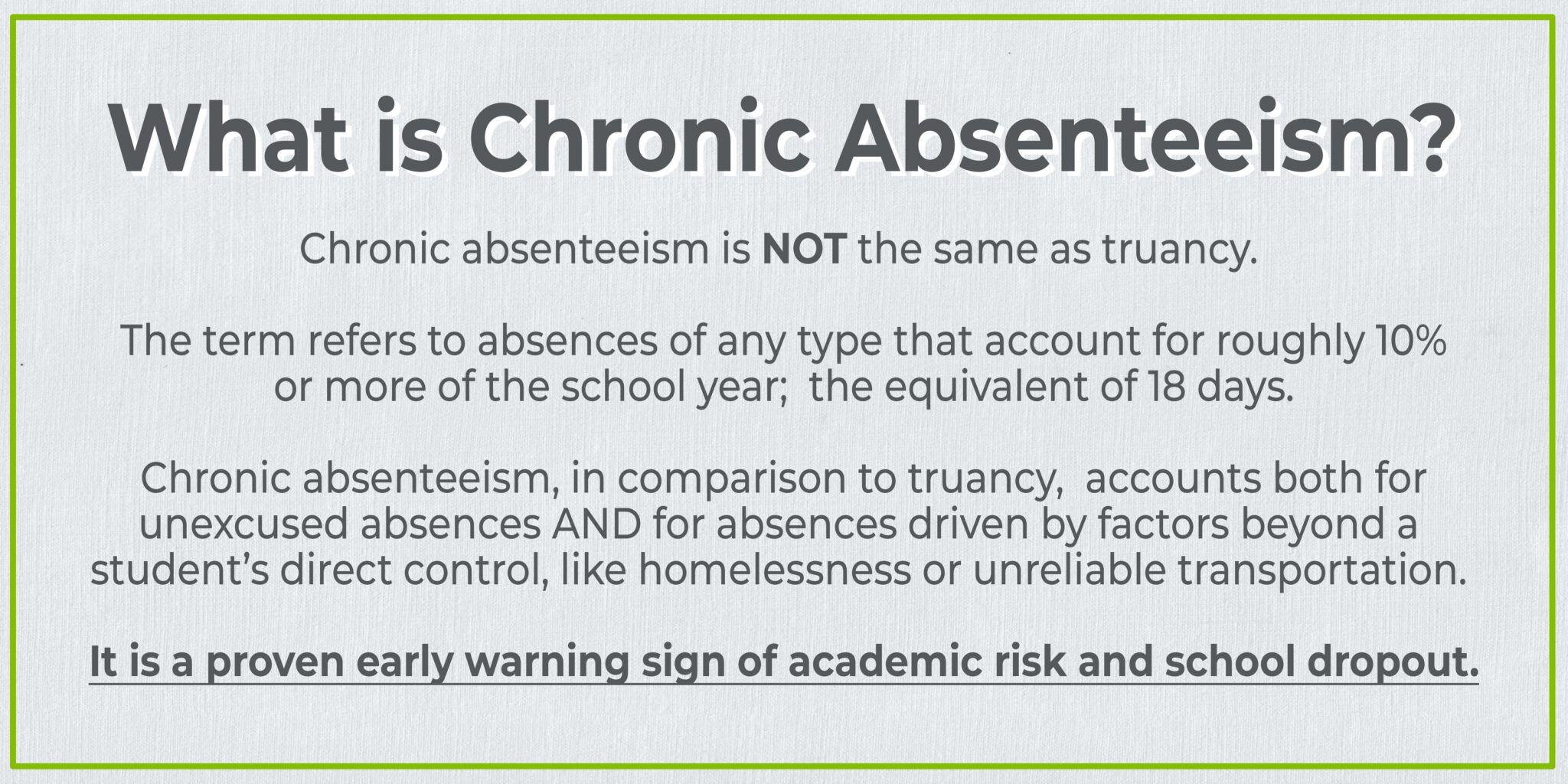
Looking outside of New York to the country at large, a recent study claims that about one in ten districts reported chronic absenteeism levels of 30 percent or more and another two in ten districts reported rates between 20 and 30 percent in the 2023–2024 school year.
The drivers of this worrying phenomenon are far from straightforward. Scholars cite the legacy of COVID, before which absenteeism rates were falling throughout NYC public schools. “If the pandemic was an earthquake, the subsequent rise in absenteeism has been a tsunami that is continuing to disrupt learning,”3 said Thomas Kane, a Professor of Education at Harvard University.
Structural factors, such as historical segregation, poverty, unpredictable work schedules, and interactions with the justice system also take much of the blame.4 Given this reality, the challenge for schools is that much of the work to help address chronic absenteeism falls outside of their purview.
“If the pandemic was an earthquake, the subsequent rise in absenteeism has been a tsunami that is continuing to disrupt learning.”
– Thomas Kane, Professor of Education at Harvard University
The impacts are severe and well documented: A recent study in California found that only 17 percent of students chronically absent in both kindergarten and 1st grade were proficient readers by the end of 3rd grade compared to 64 percent of their peers. When children from marginalized families, (those most likely to be chronically absent) fall behind, they are less likely to have the resources to make up for lost time.5 Students who are chronically absent in early years of school tend to remain chronically absent and perform less well on test scores in later years.6 Clearly, absenteeism leaves a legacy that is hard to address.
Why is Chronic Absenteeism so Hard to Tackle?
It all begins with how we measure school attendance; the most common measure is Daily Attendance. This approach, while crucial, often fails to reveal important absenteeism related issues. It is easiest to illustrate this point using a real world example: If you have a school of 200 students with 95 percent average daily attendance, 30 percent (or 60) of the students could be missing nearly a month of school over the course of the school year. In other words, relying exclusively on Average Daily Attendance rates prevents school staff from determining whether that 5% average absence rate is due to many students missing a few days (normal) OR a small but still significant minority of students missing many days7 (cause for concern).
While solutions exist to solving the absenteeism crisis, often they require community-wide solutions to address other pressing problems such as access to transport, healthcare, and fresh food.8 School staff may be left with the sense that there is little they can do, removing the agency of one of the primary interest groups trying to address chronic absenteeism.
What Actions can Schools Take?
Despite the challenges noted above, educators are far from powerless in confronting this reality. A recent article on Chalkbeat lays out a number of approaches which schools across the city are piloting. These center around better data collection, early intervention and peer to peer support. Beyond these measures, research suggests that Project Based Learning (PBL) curricula can also raise attendance across all ages and socioeconomic levels.9
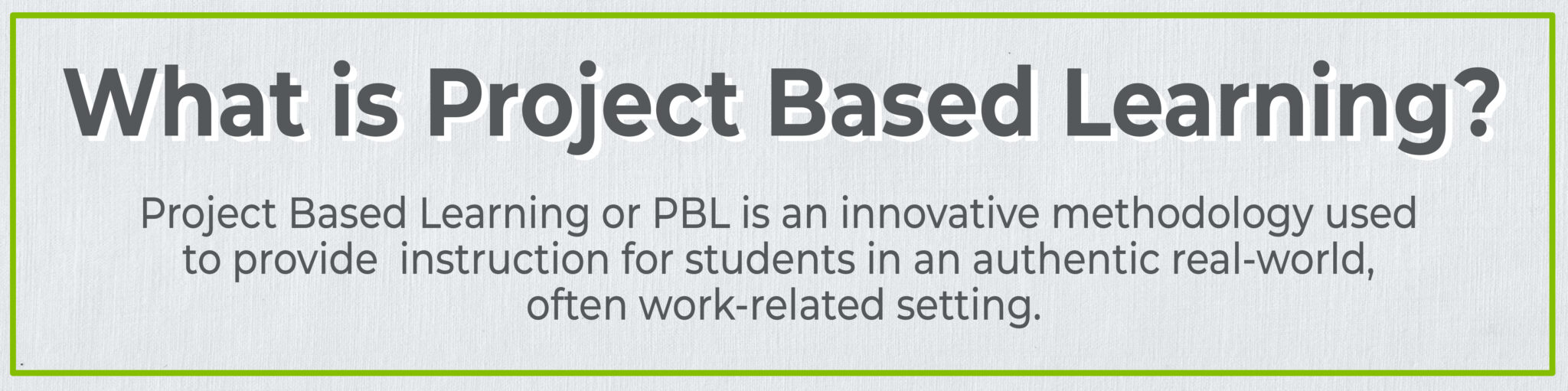
Recent studies show a direct correlation between project-based learning and higher attendance levels. PBL also leads to higher test scores and develops social and emotional faculties. Intuitively, these findings make sense; PBL tends to be more applicable and relatable, bridging a student’s outside life with what they are learning in school. A report by the University of Michigan supports this claim, citing the ease of engaging students with PBL.10
Furthermore, another study showed a direct correlation between PBL and positive attendance trends, particularly in economically disadvantaged communities.11
How can Hydroponic Classrooms Help?
At NY Sun Works, we bring a hydroponic and aquaponic PBL curriculum for schools to implement in their STEM classes. Lessons include our Farming Foundations curriculum, offered from K-12, through which students learn the science behind hydroponics and how to grow their own food from seed to harvest in the classroom. What really highlights NYSW’s PBL curriculum as a chronic attendance preventive measure is the presence of living, growing plants in the classroom.
The Yale Ledger recently published an extensive list of benefits of green spaces in schools, including the improvement of cognitive and learning development, social emotional development, memory, and concentration.12 But green spaces in classrooms are also beneficial to attendance. A study found that greener schools not only have better academic outcomes, they also have higher attendance rates.13 Our partner schools’ Hydroponic Classrooms can and should play a role in helping address chronic absenteeism.
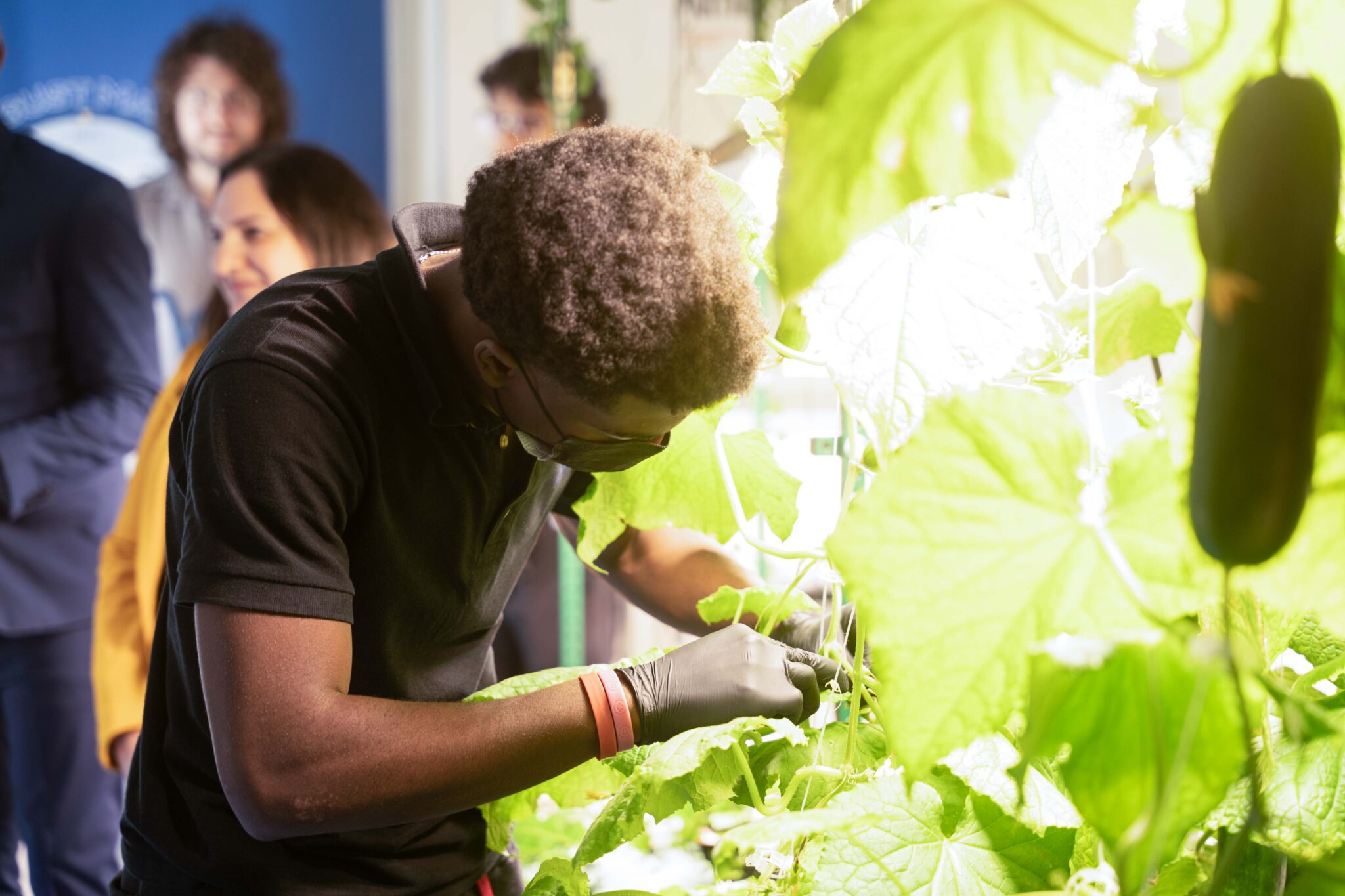
Students at August Martin High School in Queens, NY harvest cucumbers from a vine crop system.
Policymakers and educators seeking to improve chronic absenteeism in NYC can look at the addition of Hydroponic Classrooms in schools as not only a way to strengthen STEM education, but to provide tools and agency to schools addressing chronic absenteeism. By providing schools with a hydroponic and aquaponic project-based learning curriculum, our work can aid in solving the chronic absenteeism crisis NYC public schools have been experiencing and help reverse the troubling trend post-COVID.
Author: Ganesh Mejia-Ospina
Author Bio: Ganesh Mejia is a third year undergraduate studying Mathematics and Philosophy at the University of Chicago. He interned for NY Sun Works in the summer of 2024, where he researched and wrote articles on climate policy, the impact of chronic absenteeism, and food insecurity on youth education outcomes. In his free time, Ganesh is a passionate soccer fan and player. He also likes birding, reading, and film.
- https://www.osc.ny.gov/files/reports/pdf/missing-school-ny-chronic-absenteeism.pdf ↩︎
- https://www.osc.ny.gov/files/reports/pdf/missing-school-ny-chronic-absenteeism.pdf ↩︎
- https://news.harvard.edu/gazette/story/2025/02/u-s-students-need-to-start-showing-up-pandemic-covid-learning-loss/ ↩︎
- https://www.cityhealthdashboard.com/blog-media/chronic-absenteeism-trends ↩︎
- https://www.attendanceworks.org/wp-content/uploads/2017/04/Chronic-Elementary-Absenteeism-A-Problem-Hidden-in-Plain-Sight.pdf ↩︎
- http://www.nccp.org/publication/present-engaged-and-accounted-for-the-critical-importance-of-addressing-chronic-absence-in-the-early-grades/ ↩︎
- https://www.attendanceworks.org/wp-content/uploads/2017/04/Chronic-Elementary-Absenteeism-A-Problem-Hidden-in-Plain-Sight.pdf ↩︎
- https://www.attendanceworks.org/chronic-absence/the-problem/ ↩︎
- https://www.lucasedresearch.org/wp-content/uploads/2021/01/MLPBL-Research-Brief-1.pdf ↩︎
- https://record.umich.edu/articles/project-based-learning-yields-better-student-outcomes-studies-show/ ↩︎
- https://scholarworks.iu.edu/journals/index.php/ijpbl/article/view/28336 ↩︎
- https://campuspress.yale.edu/ledger/thinking-green-why-schools-should-have-natural-spaces/ ↩︎
- https://www.ncbi.nlm.nih.gov/pmc/articles/PMC6388261/ ↩︎
Blah
VERTICAL FARM DAILY: Senator, US Representative attend ribbon-cutting for hydroponic classroom
On February 14th, NY Sun Works gathered with Senator Toby Ann Stavisky, school leaders, teachers, parents and students at Thomas Edison High School in Queens for the ribbon-cutting ceremony of a new hydroponic classroom designed to foster a love of science, nature and gardening among students. U.S. Representative Grace Meng and a representative for Assembly Member David Weprin also joined the celebration of this new resource in their community.
Blah
PIX 11 News: South Bronx School Celebrates Opening of Hydroponic Classroom
The benefits of a Hydroponic Classrooms are wide-ranging. The students learn about science, healthy eating, and life skills.
Blah
THE KELLY CLARKSON SHOW: Kelly Clarkson Loves DIY Urban Gardening In Schools
New York Sun Works is a nonprofit bringing sustainable urban farming to underserved classrooms by building hydroponic gardens! Executive director and mother of two Manuela shares how the gardens are teaching students about the future of farming, while also helping feed the community. Kelly also meets fifth graders Zoe and Giovanni, who demonstrate how a hydroponic garden works. Watch till the end for a huge surprise for New York Sun Works!
Blah
LIC: Long Island City School Celebrates Launch of Hydroponic Farm for STEM and Sustainability Education
Long Island City’s PS/IS 78Q has unveiled a new hydroponic classroom farm designed to foster a love of science, gardening and nature among students at the school.
Blah
NY Sun Works Opens New Hydroponic Farm at PS/IS 78Q Funded by Council Member Julie Won
Students Enrolled in the NY Sun Works Program Receive Quality Climate Education and Fresh Food From Cutting-Edge Hydroponic Farming Technology.
QUEENS, NY [January 16, 2024] – NY Sun Works gathered with New York City Council Member Julie Won, school leaders, teachers, parents and students at PS/IS 78Q in Queens for the ribbon cutting ceremony of a new hydroponic classroom designed to foster a love of science, nature and gardening among students.
Rich, bountiful greens sprout upwards from grow trays. The only sounds are the ethereal hum of LED panels and the light trickle of running water. The aroma of fresh basil, lettuce and tomatoes lingers in the air. A group of students hover around the four different hydroponic systems on display, examining each plant’s growth before selecting and cutting the ripest leaves to share with their guests. The nexus of benefits from these classrooms is clear; they bring access to fresh food, draw students more deeply into their STEM curricula and build an awareness of the connections between farming and climate change.
“At NY Sun Works, we are committed to ensuring that every public school child in New York City, no matter where they were born or where they go to school, receives a high-quality science education. Today, we get one lab closer to that goal,” said NY Sun Works Executive Director Manuela Zamora. “As we face climate disasters from California to the Carolinas, many many leaders will talk about the importance of protecting the climate. I can tell you, proudly, that these leaders here with us today do more than just talk. They take action.”
“Today as we cut the ribbon, we are not just opening the doors to a new lab. We are unlocking a future full of innovation, learning and opportunity,” said PS/IS 78Q Principal Deana Rombone.
“As a longtime proponent of hydroponics in schools, I am thrilled to see the opening of this new hydroponics classroom at PS/IS 78Q. This classroom will help students learn valuable lessons about bioscience and agriculture, allowing them to improve their overall understanding of the STEM fields,” said Queens Borough President Donovan Richards Jr. “As we face climate change and many other serious environmental challenges, it’s never been more important for our students to receive a solid STEM education. I’m proud to have allocated millions of dollars to build more than two dozen hydroponics labs in schools across Queens since taking office, and I look forward to working with NY Sun Works to construct many more in the years to come.”
“I’m happy that I provided $75,000 in capital funding for the new hydroponics classroom at PS/IS 78Q that teaches our students how to sustainably grow food in our city,” said New York City Council Member Julie Won. “Thank you to PS/IS 78Q and NY Sun Works for helping us to create climate-friendly education in our schools. The ongoing climate crisis means that we must continue supporting programs that give students the tools to be sustainable and create young leaders that care about the future of our planet.”
“PS/IS 78Q is incredibly grateful to Council Member Julie Won for her commitment to schools and the education of children in Western Queens. Without her help and dedication we could not provide children with the opportunities that she has enabled us to produce,” said PTA President Kelly Craig. “We are also grateful for our partnership with NY Sun Works and the environmental education and awareness they bring to our children’s classroom. Children learn best by being able to be hands-on during lessons. We value the lessons that our children are now being taught on climate change and sustainability. And all the other tangible STEM lessons yet to come.”
In Queens, NY Sun Works has 52 partner schools, with another 28 labs at new schools to be installed this year. The nonprofit opened its first lab in 2010 and has grown today to serve more than 140,000 students across over 350 public schools in the New York City metro area. NY Sun Works delivers inquiry-based K-12 science and sustainability education through the lens of urban farming. The goals are to support each school’s long-term capacity to deliver a high-quality science program; optimize students’ learning experience in the hydroponic classroom; and expand access to fresh produce for students and their families, while preparing students to exceed NYC’s science standards. Hydroponic technology is farming that enables the cultivation of plants in an indoor environment. Rather than from the sun, plants receive energy from LED lighting that is tailored specifically to the energy needs of the plants. Instead of using soil, seeds are planted in soil-free growth mediums.
Partner schools like PS/IS 78Q will receive ongoing professional development training for science educators and weekly visits from a hydroponic specialist to guide teachers in hydroponic systems maintenance, provide planting, harvest, and produce distribution support; and clean, prep, and troubleshoot systems.
Blah
NY SUN WORKS RECEIVES $26,000 GRANT FROM THE AMAZIN’ METS FOUNDATION
Grant to provide state-of-the-art hydroponic technology and STEM+ curriculum to over 1,000 K-12 public school students in Queens.
QUEENS, NY – NY Sun Works, a New York-based nonprofit that delivers science and sustainability education through urban farming to K-12 students, today announced a $26,000 grant from the Amazin’ Mets Foundation. The grant will provide high-quality climate and environmental science education through hydroponic farming at International High School at LaGuardia Community College in Long Island City and PS 223 Lyndon B. Johnson in Jamaica, Queens.
NY Sun Works brings hydroponic farming technology and a comprehensive STEM +
sustainability curriculum to public schools to engage students in a hands-on exploration of
climate, environmental, and mandated science content through the lens of urban farming.
With a focus on reaching students in disadvantaged communities, the program addresses the
need for solution-oriented climate education and the issue of historic underinvestment in
STEM education in low-income and minority neighborhoods. Both schools supported by the
grant serve low-income populations (91% poverty rate) and are located in federally
designated disadvantaged communities.
“We are thrilled to be the recipient of a grant from the Amazin’ Mets Foundation to expand
our efforts to bring climate and sustainability education to public schools in under-resourced
communities in Queens,” said Manuela Zamora, NY Sun Works Executive Director. “Our
hands-on sustainability science curriculum and state-of-the-art Hydroponic Classrooms give
students the opportunity to experience science through a different lens – one that empowers
them to be part of the solution to global environmental challenges and supports access to
healthy food for their families and school community.”
“The Amazin’ Mets Foundation is committed to opening doors for New Yorkers,” said Alex
Cohen, Owner of the New York Mets and President of the Amazin’ Mets Foundation.
“We are proud to support innovative environmental science programs and the next generation
of STEM leaders in our Queens community.” The grant will provide resources to maintain hydroponic farming technology, purchase farming supplies for the classroom, and train and mentor science educators on implementing an innovative curriculum that uses the hydroponics systems as instructional tools.
During weekly instruction in their Hydroponic Classroom, students will explore science and
sustainability topics; participate in seed-to-harvest hydroponic farming; and share the produce
grown with their families and school communities.
NY Sun Works delivers inquiry-based K-12 science and sustainability education through
urban farming, while covering the Common Core, Scope and Sequence, and EfS science
standards. Hydroponic technology is indoor vertical farming that enables the cultivation of
plants in an indoor environment. Rather than from the sun, plants receive energy from LED
lighting that is tailored specifically to the energy needs of the plants. Instead of using soil,
seeds are planted in soil-free growth mediums.
The Amazin’ Mets Foundation is the philanthropic arm of the New York Mets. The
Foundation is committed to providing needed services and opportunities to children, families,
and underserved groups. Since its inception in 2021, the Amazin’ Mets Foundation has
awarded over $13 million in grants to more than 180 organizations in its community,
including the communities surrounding affiliate teams.
Blah
VOA: New York City Children Learn Gardening to Build Healthier Habits
In New York City, where some communities have limited access to fresh produce, a unique classroom program is teaching students how to grow their own food and improve their eating habits. Aron Ranen has more on how gardening is shaping healthier futures for kids.
Blah
NY Sun Works and NY Hall of Science Welcome Local Pre-K Students to First Harvest from Hydroponic Garden Exhibit
Young Students from the Mosaic School (Q369) harvested and took home fresh produce from the hydroponic systems.
CORONA, NY – The New York Hall of Science and NY Sun Works welcomed dozens of Pre-K students from nearby Mosaic School in Corona this morning to be the first to harvest produce grown in the newly installed hydroponic garden.
These students were guided by instructors from New York Sun Works, which designed and installed the exhibit, on the basics of hydroponics, how a plant grows, and how to harvest the basil plants in the unique hydroponic systems that make up the exhibit. At the end of the lesson, students were invited to take the harvested basil home to their families.
The hydroponic lab at the Hall of Science is one of over 350 citywide and 70 in Queens that NY Sun Works has installed and supports in public schools. These labs are coupled with standards aligned, grade-specific, year-round sustainability science curriculum and teacher training. Together, they are designed to empower and inspire the next generation of scientists, biologists, agriculturalists, agronomists, activists, and community leaders who will create solutions to local and global climate challenges.
Hydroponic technology is indoor vertical farming that enables the cultivation of plants in an indoor environment. Rather than from the sun, plants receive energy from LED lighting that is tailored specifically to the energy needs of the plants. Instead of using soil, seeds are planted in soil-free growth mediums.
“Watching these young people in action, picking living plants and learning about seed to harvest cycles of growing, is exactly the sort of exciting and innovative learning experiences we are known for,” said President and CEO of the New York Hall of Science Lisa Gugenheim. “We are just thrilled with the ongoing partnership with NY Sun Works, who are leading the way in hands-on sustainability science education in New York City, and supporting our mission of Design, Make, Play. We look forward to many more bountiful harvests to come.”
The NY Sun Works hydroponic garden at the Hall of Science is a living exhibit, teaching NYSCI visitors of all ages about the science of sustainability. It was unveiled last month during climate week, along with a new $2.3M commitment from Queens Borough President Donovan Richards to fund similar hydroponic systems in science classrooms Queenswide.
“This hydroponic lab at the New York Hall of Science is our first and only lab that is also a living exhibition, open to the public and the many students and teachers who visit the museum each day,” said NY Sun Works Executive Director Manuela Zamora. “The day of harvest is an especially exciting one for our young learners. On that day, the unique way that the hydroponic systems support the growing cycle is finally revealed in a ready to pick plant. Watching students make those new connections while experiencing the taste and smell of fresh basil, perhaps for the first time, is truly where the joy of learning meets the science of sustainability. We thank NYSCI for their excellent partnership.”
The next harvest of the garden is expected to be in 4-6 weeks.
Blah
GLASE Launches E-GROW Certification to Cultivate Youth Interest in AgTech and Controlled Environment Agriculture
Ithaca, NY October 23, 2024 — Cornell University’s Greenhouse Lighting and Systems Engineering (GLASE) consortium is thrilled to announce the USDA National Institute of Food and Agriculture (NIFA) is investing in a GLASE workforce development initiative.
The Empowering Greenhouse Resiliency with an Optimized Workforce (E-GROW) project is designed to inspire and develop youth competency in agricultural technology (AgTech) and Controlled Environment Agriculture (CEA). In partnership with seven project collaborators and ten middle and high schools across four U.S. states, E-GROW will launch a certificate program, preparing the next generation for careers in the rapidly evolving field of CEA.
“Young people are a solution to the greenhouse industry’s labor challenges. CEA offers a vehicle for STEM education and presents an interesting career opportunity for youth to envision for themselves. GLASE is expanding our credible education and training model to serve learners entering the workforce development pipeline.” shared Gretchen Schimelpfenig, Executive Director of GLASE.
The project will bridge the gap between technology and agriculture, specifically focusing on automation in greenhouse climate control, robotics and AI for crop science, and energy and economic benchmarking of vertical farms. Through innovative, non-formal educational modules and experiential learning, E-GROW seeks to attract tech-savvy STEM students and foster a deeper understanding of AgTech in food production.
“Today’s youth are the scientists, innovators, farmers, and decision-makers of tomorrow; it is imperative we provide educational opportunities that advance students’ understanding of technologies, including in agriculture, that will create a more sustainable and resilient future,” said Manuela Zamora, Executive Director of NY Sun Works. “NY Sun Works is thrilled to collaborate with GLASE and partners on this initiative, which will enable youth, and in particular students from groups historically underrepresented in STEM, to build skills and prepare for careers in the growing field of controlled environment agriculture.”
Piloting the Future Workforce: Starting in ten schools across New York, Pennsylvania, Virginia, and Wyoming, E-GROW will reach between 500 and 1,000 students throughout the project. The program places a particular emphasis on engaging student populations traditionally underrepresented in STEM fields, including rural youth, low-income students, young women, ethnic minorities, and individuals with disabilities.
Dr. Neil Mattson, Professor at Cornell University, adds, “GLASE and Cornell University are pleased to lead this interdisciplinary project to engage and develop the next generation of agriculture technology leaders. Whether or not a student ultimately pursues a career in CEA, we believe this project can be a useful springboard for getting students engaged in plant science, engineering, and computer science. We are also pleased with the school and academic partnerships this project brings together in New York, Pennsylvania, Virginia, and Wyoming.”
“Commonwealth Charter Academy (CCA) is proud to be a partner in helping prepare today’s students to be the agricultural leaders of tomorrow,” said Crystal Huff, Director of AgWorks at CCA, a K through 12 public cyber charter school serving more than 30,000 students and their families throughout Pennsylvania. “CCA is committed to ensuring that the 21st-century workforce has the skills and knowledge necessary to meet the growing needs and demands of our evolving agriculture industry. We must stay ahead of the curve and ensure students are well-prepared for the future economy.”
As part of the pilot, students will work toward earning a CEA certificate, equipping them with the skills and knowledge to enter the growing AgTech industry. A robust mentoring network of industry professionals and academic experts will guide students through the program, providing hands-on learning opportunities and career insights.
“CEA training pathways for middle and high school students are a crucial component of the workforce training pipeline for the growing CEA industry,” said Dr. Kaylee South, Assistant Professor and Extension Specialist at Virginia Tech. “We are excited to work with the E-GROW project partners to develop and implement these pathways with an emphasis on engaging populations underrepresented in STEM fields. These educational tools will be key to provide knowledge and skills related to CEA and general exposure to agricultural technology.”
Collaborative Effort to Drive Innovation: Funded by the Food and Agriculture Non-formal Education (FANE) program, E-GROW brings together partners from higher education and youth development sectors to create a multi-faceted learning experience. The project will leverage existing research on CEA and AgTech to identify gaps in workforce development and education, tailoring learning materials to address these needs.
“The University of Wyoming is thrilled to be part of this impactful project, inspiring future generations with modern indoor agriculture technologies. Forming strong partnerships and creating shared learning experiences with the K-12 education community are key to promoting the growth of CEA in Wyoming and across the nation, leading to economic opportunities, jobs, and more local food production,” said Dr. Liping Wang and Dr. Anthony Denzer from the University of Wyoming.
Ian Kanski, Director of the Center for Agricultural Research at the University of Harrisburg adds “CEA provides a unique ‘living laboratory’ for learners to experience and apply a broad set of science and technology disciplines, developing skills and interest in some the most important technical fields for the coming economy. The E-GROW project led by Cornell is exactly the sort of multi-state and multi-institutional collaboration that’s needed as our education sector adapts to a changing food and agriculture landscape — and the Center for Advanced Agriculture and Sustainability is proud to be a contributor.”
Students will engage in capstone projects, demonstrating their competencies and showcasing how AgTech can improve food production and support local economies. These projects, along with outreach materials, will help build public confidence in CEA and AgTech by illustrating the tangible benefits of technology-driven food systems.
David Ceaser, Lead Agronomist at Agritecture, commented, “Agritecture is extremely pleased to be a part of the E-grow project. Agriculture faces an aging-out problem worldwide, and we believe that engaging youth in CEA and technology-based agriculture is key to ensuring future generations of farmers.”
Aiming for Long-Term Impact: The E-GROW initiative is designed with sustainability in mind. Over four years, project partners will develop and refine a scalable educational model that can be replicated across other schools and states. Feedback from pilot schools will help to ensure that the program meets accreditation standards and can grow into a national CEA workforce credentialing program.
For more information on the E-GROW project, please contact GLASE Extension Support Specialist, Matthew Del Buono at mjd378@cornell.edu and follow GLASE on LinkedIn.